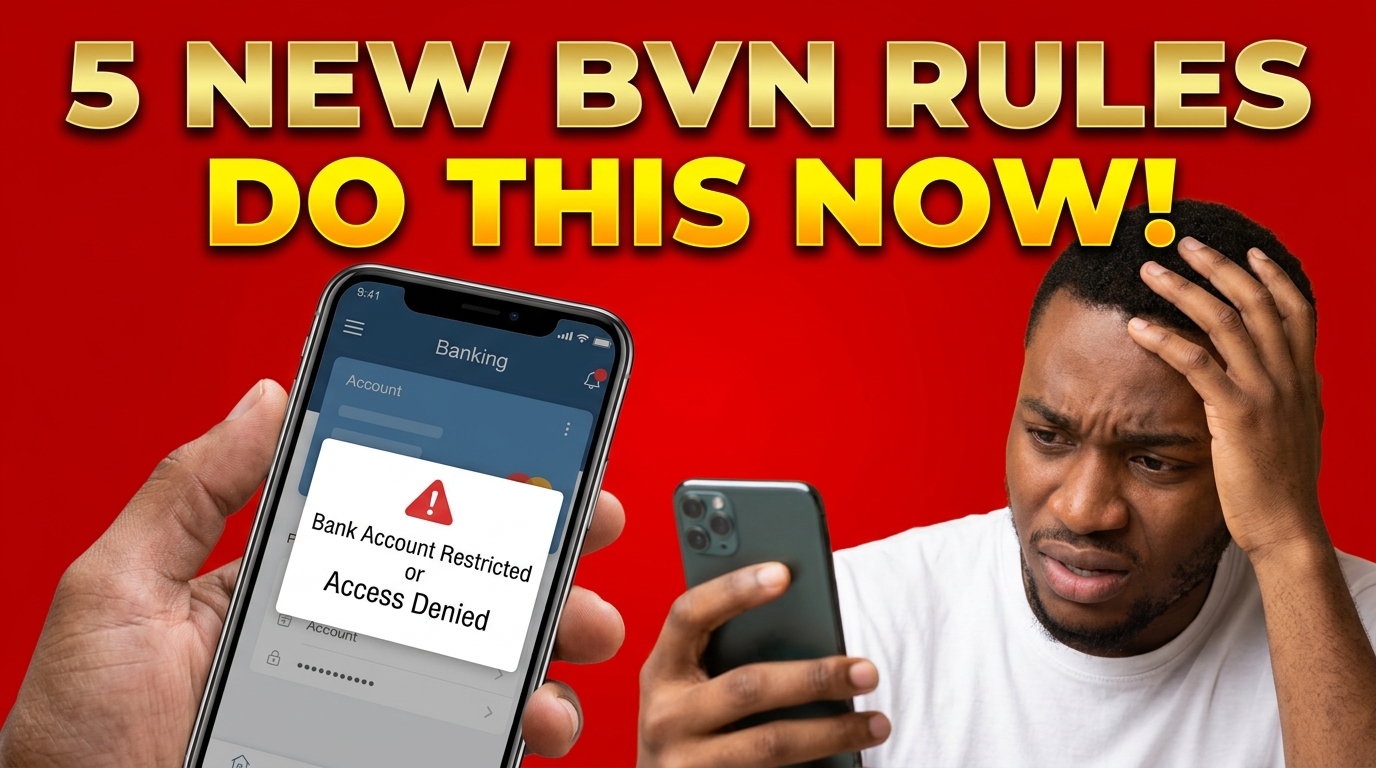
The Central Bank of Nigeria (CBN) has issued a major update to the Bank Verification Number (BVN) regulatory framework. Starting May 1, 2026, new rules will significantly change how you interact with your bank accounts, mobile apps, and personal data.
If you haven’t updated your records or understood these changes, you risk 24-hour account freezes or even permanent lockouts. Here are the 5 new BVN rules every Nigerian must know before the May 1st deadline.
1. The “One-Change” Rule for Phone Numbers
Perhaps the most critical update is the restriction on linked mobile numbers. To combat SIM-swap fraud, the CBN now allows you to update the phone number linked to your BVN only once in your lifetime.
- The Risk: If you use a “temporary” SIM or lose access to your registered line after using your one-time change, regaining access to your bank account will involve “arduous regulatory hurdles.”
- Action Required: Ensure your BVN is linked to a secure, permanent SIM card—ideally the same one registered with your National Identification Number (NIN).
2. The 24-Hour “Temporary Watchlist”
Banks are now mandated to implement a real-time fraud monitoring system. If a transaction triggers a red flag, your BVN will be placed on a temporary watchlist for 24 hours.
- What Happens: During this window, your linked accounts may be frozen or restricted. The bank is required to contact you immediately for verification.
- Pro Tip: Keep your phone reachable. If the bank cannot verify the transaction with you within that 24-hour window, the restriction could be extended, leading to a total account freeze.
3. Strict 18+ Age Requirement for BVN
The CBN has officially set the minimum age for BVN enrollment at 18 years. This move effectively removes minors from the independent biometric identity framework.
- For Parents: Children and teenagers can no longer have their own independent BVNs.
- The Solution: Financial needs for minors must now be handled through guardian-managed accounts or specialized “child products” where the parent’s BVN serves as the primary identifier.
4. Mandatory Device “Single-Login” Policy
To stop hackers from accessing your funds via stolen credentials, mobile banking apps will now limit access to one device at a time.
- Automatic Logout: Logging into your bank app on a new phone will automatically log you out of the old one.
- Transaction Caps: Most banks are introducing a N20,000 transaction limit (or similar caps) for the first 24 hours after you switch to a new device as an extra security buffer.
5. Centralized Data Access & “No Informal Fixes”
Access to the BVN database is now strictly limited to CBN-licensed financial institutions. The era of using “third-party agents” or “informal connections” to fix BVN errors is over.
- Official Channels Only: Any data mismatch (name, date of birth, etc.) must be corrected through formal bank channels.
- Impact: Because the system is now more rigid, a single digit error in your name or date of birth could lead to immediate restriction of credit and liquid assets until formally resolved.
Summary Table: BVN Changes at a Glance
| Feature | Old Rule | New Rule (Effective May 1, 2026) |
| Phone Number Updates | Multiple times | Only Once in a lifetime |
| Minimum Age | Flexible (with guardians) | Strictly 18+ |
| Fraud Flagging | Delayed investigation | Immediate 24-hour watchlist |
| App Login | Multiple devices possible | One device at a time |
| New Device Limit | Full access immediately | Transaction caps for 24 hours |
Final Checklist Before May 1st
To avoid “Post No Debit” (PND) orders or transaction delays, do the following today:
- Audit your SIM: Ensure your BVN-linked number is active and in your possession.
- Verify NIN Linkage: Confirm that your NIN and BVN details (Name and DOB) match perfectly.
- Contact your Bank: If you have an old phone number linked, update it now before the “one-change” rule makes it more difficult.
- Update Guardian Accounts: If you have a minor with a personal account, visit the bank to transition it to a guardian-led structure.
Note: These rules are designed to protect your money from the rising wave of digital fraud. While they may seem strict, they are essential for a more secure Nigerian financial ecosystem.





Leave a Reply