Updated: May 17, 2026 | Read time: 22 min | ~4,200 words | All skill levels
Claude AI is Anthropic’s flagship family of large language models and in 2026, it is widely regarded as one of the most capable, safest, and most versatile AI assistants available. Whether you are sending your first prompt or architecting multi-step agentic pipelines, this guide is the only resource you need.
Quick stats:
200,000-token context window
3 model tiers in 2026 (Opus, Sonnet, Haiku)
5+ Claude products and tools
Claude Sonnet 4.6 ranked #1 on SWE-bench Verified among general-purpose models (early 2026)*
Claude is a family of AI assistants developed by Anthropic, an AI safety company founded in 2021. Unlike many competitors, Anthropic was founded with a deliberate safety-first mandate — the team behind Claude includes some of the most respected AI safety researchers in the world.
At its core, Claude is a large language model (LLM) capable of reading, writing, reasoning, coding, analyzing data, and — in its agentic form — acting autonomously across complex, multi-step tasks. It is accessible via claude.ai, the Anthropic API, Claude Code, and several beta integrations.
Key Differentiator: Claude was trained using Constitutional AI (CAI) and Reinforcement Learning from Human Feedback (RLHF). Its “constitution” — a set of principles — guides the model to be helpful, harmless, and honest. This makes Claude particularly trustworthy for enterprise and sensitive applications.
What Makes Claude Different from Other AI Models?
200,000-token context window — process entire codebases, legal contracts, or books in one session.
Nuanced reasoning — handles ambiguous, multi-step problems with structured thinking.
Extended thinking mode — Claude can “think before it answers,” improving accuracy on hard problems.
Constitutional AI safety — built-in principles make refusals principled, not arbitrary.
Native tool use & agentic workflows — Claude can plan, search, code, and execute multi-step tasks.
No advertising — Claude products are ad-free; Anthropic does not sell access to advertisers.
02 The Claude Model Family in 2026
As of May 2026, Anthropic offers three production models under the Claude 4 family. Each is optimized for a different cost-speed-capability trade-off.
Claude Opus 4.6 — Most Powerful
Anthropic’s frontier model. Best for the most complex reasoning, research synthesis, long-document analysis, and nuanced creative work. API model string: claude-opus-4-6.
Claude Sonnet 4.6 — Best Value
The everyday workhorse — fast, highly capable, top-ranked coder. Ideal for most professional, coding, and agentic use cases. API model string: claude-sonnet-4-6.
Claude Haiku 4.5 — Fastest
Ultra-low latency for lightweight tasks, high-volume processing, chatbots, and real-time interactions. API model string: claude-haiku-4-5-20251001.
Which model should you use? For most everyday tasks on claude.ai, Sonnet 4.6 is the default and best starting point. Use Opus 4.6 when you need maximum depth. Use Haiku 4.5 in API applications where you need high throughput at low cost.
Choosing the Right Claude Model
Model
Best For
Speed
API Cost
Opus 4.6
Deep research, complex reasoning, advanced agentic tasks
Slower
Higher
Sonnet 4.6
Code, analysis, writing, most professional workflows
The fastest way to start using Claude is through claude.ai. A free account gives you access to Claude Sonnet 4.6 with generous daily limits. Paid tiers (Pro, Team, Enterprise) unlock Opus access, higher limits, priority throughput, and admin controls.
Step-by-Step: Your First Claude Session
Navigate to claude.ai and create a free account with your email or Google login.
Type your first prompt. Try: “Summarize the key principles of Constitutional AI in plain English.”
Review Claude’s response. Notice the clarity, reasoning, and any caveats — this is Claude’s honesty training at work.
Continue the conversation. Claude retains full context within the session — you can reference anything said earlier.
Try uploading a file (PDF, CSV, image). Claude can analyze, summarize, extract data, or answer questions about it.
Enable web search (toggle in the input toolbar) so Claude can retrieve real-time information.
Pro Tip: Use Projects on claude.ai to give Claude persistent context. Upload your documents, style guides, or company info once, and every conversation in that Project has access to it.
04 Advanced Prompting Techniques
The quality of Claude’s output is directly proportional to the quality of your prompt. The following techniques represent the current state-of-the-art in prompt engineering for Claude.
1. Role + Task + Format (RTF) Prompting
Structure prompts with three explicit components: who Claude should be, what it should do, and how it should format the response.
You are a senior financial analyst at a top-tier investment bank.

TASK: Analyze the following earnings transcript and identify the
three most significant forward-looking risk factors.

FORMAT: Return a numbered list. Each item: [Risk Name] — 2-sentence
explanation — [Severity: High/Medium/Low].

[PASTE TRANSCRIPT HERE]
2. Chain-of-Thought (CoT) Reasoning
For complex or mathematical problems, explicitly ask Claude to think step-by-step before giving an answer. This activates more deliberate reasoning and significantly reduces errors.
Before you answer, think through this step by step,
showing your reasoning at each stage:

A company's revenue grew 23% YoY from $4.2M. What is
the current revenue? Verify your arithmetic.
3. XML Tags for Structured Context
Claude is particularly responsive to XML-tagged context. Use tags to clearly delineate different parts of a complex prompt:
<context>
  You are helping draft a response to a client complaint.
  Our refund policy: 30-day returns on unused items only.
</context>

<complaint>
  [PASTE CUSTOMER MESSAGE HERE]
</complaint>

<instruction>
  Draft a professional, empathetic response that acknowledges
  the customer's frustration and clearly explains the policy.
</instruction>
4. Extended Thinking Mode
Claude supports an extended thinking capability where the model reasons internally before outputting a final answer. This is especially powerful for hard coding challenges, logical proofs, and multi-constraint optimization problems. Via the API, pass "thinking": {"type": "enabled", "budget_tokens": 10000} in your request body.
5. Prompt Chaining
Break large tasks into a sequence of smaller prompts. Each output feeds into the next prompt as input. This is the manual precursor to agentic workflows.
Prompting Techniques at a Glance
Technique
Best Use Case
Complexity
RTF Prompting
Any professional task requiring structured output
Low
Chain-of-Thought
Math, logic, multi-step reasoning
Low
XML Tagging
Complex multi-part instructions
Low
Extended Thinking
Hard coding, proofs, adversarial problems
Medium
Prompt Chaining
Long-form content, research synthesis
Medium
Few-Shot Examples
Style matching, classification, formatting
Low
System Prompts
Persistent persona, rules, tool instructions
Medium
05 Agentic Workflows: Claude as an Autonomous Agent
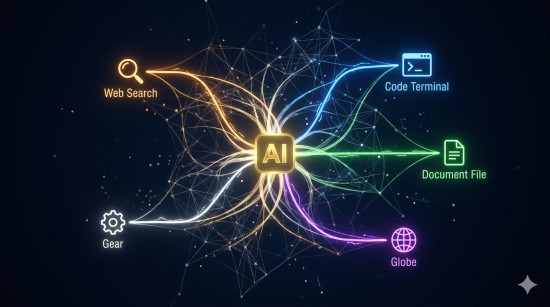
Agentic AI refers to systems where a model doesn’t just respond to a single prompt — it plans, takes actions, uses tools, and iterates toward a goal over multiple steps, with minimal human intervention. This is the frontier of practical AI in 2026, and Claude is purpose-built for it.
Definition: An agentic workflow is any task where Claude autonomously decides which tools to call, in what order, and how to handle intermediate results — operating with human oversight at the goal level rather than at each individual step.
The Anatomy of a Claude Agentic Workflow
Goal → User defines the objective in natural language Plan → Claude decomposes the goal into subtasks Act → Claude calls tools: web search, code execution, file ops Reflect → Claude evaluates results and adjusts its plan Deliver → Verified final output returned to the user
Core Agentic Capabilities
Tool Use (Function Calling): Claude can call any function you define — APIs, databases, external services — and incorporate results into its reasoning.
Computer Use: Claude can operate a computer interface — clicking, typing, navigating browsers and apps — to complete tasks that require GUI interaction.
Code Execution: Claude writes, runs, debugs, and iterates on code autonomously, verifying outputs before proceeding.
Web Search: Real-time web browsing to gather current information, verify facts, or research a topic.
File Operations: Read, write, create, and manage files across a session.
Multi-Agent Orchestration: Claude can act as an orchestrator directing sub-agents, or as a sub-agent within a larger pipeline.
Memory & Persistence: Via external memory stores passed through the context window or API, Claude can maintain state across sessions.
Agentic Workflow Example: Automated Research Report
// System prompt (simplified)
"You are a research assistant. Use web_search to gather information,
python_interpreter to analyze data, and file_write to produce
a structured report. Work step by step and verify each source."

// User goal
"Produce a 1,500-word competitive analysis of the top 3
cloud AI platforms, with a data table comparing pricing,
context windows, and benchmark scores. Save to report.md."
Claude will autonomously search the web, extract pricing data, write and execute a Python script to build the comparison table, draft the report, verify sources, and save the output — all without further prompting.
Human-in-the-Loop vs. Fully Autonomous
The best agentic systems balance automation with oversight. For high-stakes tasks (sending emails, making purchases, executing code in production), build in a human confirmation step. For low-stakes, reversible tasks (drafting documents, analyzing data, summarizing), fully autonomous pipelines are appropriate and efficient.
Anthropic’s Guidance: Claude is designed to prefer cautious actions, request clarification when uncertain, and err toward doing less rather than taking irreversible actions in ambiguous agentic contexts. This built-in conservatism makes Claude safer to deploy autonomously.
06 Building with the Claude API
Developers access Claude’s full capabilities — including tool use, extended thinking, streaming, and vision — through the Anthropic Messages API. Here is a minimal working example using JavaScript:
import Anthropic from "@anthropic-ai/sdk";

const client = new Anthropic({ apiKey: process.env.ANTHROPIC_API_KEY });

const message = await client.messages.create({
  model: "claude-sonnet-4-6",
  max_tokens: 1024,
  messages: [
    {
      role: "user",
      content: "Explain the difference between RAG and fine-tuning for LLMs."
    }
  ]
});

console.log(message.content[0].text);
Key API Features
Streaming: Use stream: true for real-time token-by-token output — essential for responsive chat UIs.
System Prompts: Pass a system field to define Claude’s persona, constraints, and available tools for the session.
Tool / Function Calling: Define tools in JSON Schema format; Claude decides when and how to call them.
Vision: Pass images as base64 or URL in the content array for multimodal analysis.
Extended Thinking: Enable deep reasoning mode via the thinking parameter.
Prompt Caching: Cache large system prompts or documents to reduce latency and cost on repeated calls.
Batch API: Process thousands of prompts asynchronously at reduced cost.
Python Quick Start
import anthropic

client = anthropic.Anthropic()

response = client.messages.create(
    model="claude-sonnet-4-6",
    max_tokens=2048,
    system="You are a helpful data analyst. Respond with structured JSON.",
    messages=[
        {"role": "user", "content": "List 5 KPIs for a SaaS business with definitions."}
    ]
)

print(response.content[0].text)
07 Claude’s Integrated Tools & Products
Beyond the core chat interface and API, Anthropic has built a suite of specialized tools that put Claude’s capabilities to work in specific contexts.
Product
Description
Best For
Claude.ai
Web, mobile & desktop chat interface with web search, file analysis, Projects, memory, and Artifacts.
Everyday use, research, writing
Claude Code
Command-line agentic coding assistant. Reads your codebase, writes, edits, runs, and debugs code autonomously.
Software development, DevOps
Claude in Chrome
Beta browser extension. Operates as a browsing agent, navigating and interacting with web pages.
Web research, data extraction
Claude in Excel
Beta spreadsheet agent. Reads, analyzes, and writes Excel files; builds formulas from natural language.
Data analysts, finance teams
Claude in PowerPoint
Beta slides agent. Generate and edit presentations from a text prompt.
Consultants, marketers
Cowork
Beta desktop tool to automate file and task management workflows.
Knowledge workers, ops teams
Anthropic API
Full programmatic access to all Claude models with tool use, streaming, vision, and more.
Developers, enterprises
Claude Code deserves special attention. It is currently one of the most powerful AI coding tools available. It operates directly in your terminal, understands entire repositories, and can autonomously fix bugs, refactor code, write tests, and deploy changes — with your approval at key decision points.
08 Real-World Use Cases by Industry
Claude’s versatility makes it applicable across virtually every professional domain. Here are high-value, proven use cases as of 2026.
Software Engineering
Autonomous bug fixing and PR generation with Claude Code
Legacy code refactoring and modernization across large codebases
Test suite generation (unit, integration, end-to-end)
API documentation generation from source code
Security vulnerability analysis and remediation
Legal & Compliance
Contract review and red-lining at scale (200K context = entire contracts)
Regulatory change monitoring and impact analysis
Legal research synthesis across case law and statutes
Policy document drafting and version comparison
Finance & Investment
Earnings call transcript analysis and signal extraction
Financial model building from natural language descriptions
Due diligence report generation from data room documents
Risk factor identification in prospectuses and filings
Healthcare & Research
Systematic literature review synthesis across hundreds of papers
Research hypothesis generation and study design review
Patient intake processing and triage support tools
Content & Marketing
Long-form SEO content at scale with brand voice consistency
Multi-channel campaign copy generation from a single brief
Competitor content gap analysis via web search + summarization
Email sequence personalization at scale
09 Safety, Privacy & Constitutional AI
Anthropic’s core thesis is that advanced AI must be developed safely or not at all. Every Claude model is trained using Constitutional AI (CAI) — a technique where Claude is given a set of principles and trained to critique and revise its own outputs against those principles. This reduces reliance on human labelers for every edge case and produces a model with more consistent, principled behavior.
Key Safety Properties
Honesty: Claude is trained to be truthful, calibrated in its uncertainty, and non-deceptive. It will acknowledge what it doesn’t know rather than confabulate.
Harm avoidance: Claude declines to assist with content that could cause serious harm — this is principled, not arbitrary.
Privacy: Claude on claude.ai does not use conversation data to train future models by default (opt-in required). Enterprise and API customers have additional data privacy controls.
No advertising: Claude products are entirely ad-free. Anthropic’s business model is subscriptions and API usage — not advertising or selling user data.
Agentic safety: In agentic contexts, Claude prefers reversible actions, errs toward doing less when uncertain, and asks for clarification rather than assuming.
Enterprise Trust: Anthropic offers a Business Associate Agreement (BAA) for HIPAA-covered healthcare use cases, SOC 2 Type II compliance, and zero data retention options for API customers. This makes Claude enterprise-ready for regulated industries.
10 Frequently Asked Questions
What is Claude AI? Claude is a family of AI assistants made by Anthropic. In 2026, the lineup includes Claude Opus 4.6, Claude Sonnet 4.6, and Claude Haiku 4.5. Each model is optimized for different trade-offs of capability, speed, and cost. Claude is accessible via claude.ai, the Anthropic API, Claude Code, and several beta integrations.
What is Claude’s context window size? Claude supports a 200,000-token context window, which is approximately 150,000 words or roughly 500 pages of text. This allows Claude to process entire codebases, lengthy legal documents, or full novels in a single conversation session.
How does Claude differ from ChatGPT? Claude and ChatGPT (OpenAI) are both large language models, but they differ in training approach, context window, and safety philosophy. Claude’s Constitutional AI training produces more principled, consistent behavior. Claude Sonnet 4.6 leads key software engineering benchmarks as of early 2026. Claude’s context window (200K tokens) is among the largest available. The best choice depends on your specific task and workflow.
What are Claude agentic workflows? Agentic workflows are multi-step processes where Claude autonomously plans, uses tools (web search, code execution, file operations, API calls), evaluates results, and iterates toward a goal — without requiring human input at every step. Examples include autonomous research reports, bug-fixing pipelines, and data analysis workflows.
Is Claude AI free to use? Yes. Claude.ai offers a free tier with access to Claude Sonnet 4.6 and generous daily usage limits. Paid tiers (Pro, Team, Enterprise) unlock access to Opus 4.6, higher message limits, priority access, Projects with document storage, and advanced admin controls. The API is billed per token with pay-as-you-go pricing.
What is Claude Code? Claude Code is Anthropic’s command-line agentic coding tool. It connects directly to your local development environment, reads your entire codebase, and can autonomously write, edit, debug, test, and commit code changes. It is one of the most powerful AI-native development tools available in 2026.
Is Claude safe for enterprise use? Yes. Anthropic provides SOC 2 Type II compliance, HIPAA BAAs for healthcare customers, zero data retention options, and role-based access controls for enterprise accounts. Claude’s Constitutional AI training also makes its behavior more predictable and auditable than models without explicit safety training.
Does Claude have memory between conversations? By default, Claude does not retain memory between separate conversations. However, claude.ai offers an opt-in memory feature that allows Claude to remember key facts across sessions. Developers building on the API can implement persistent memory by passing relevant context in the system prompt or via external vector stores.
The Bottom Line
Claude AI in 2026 is more than a chatbot — it is a comprehensive AI platform for thinking, creating, coding, and acting autonomously in the world. From a beginner’s first conversation on claude.ai to a senior engineer’s fully automated agentic pipeline powered by the API and Claude Code, the same underlying intelligence scales to meet you wherever you are.
The best way to learn Claude is to use Claude. Start at claude.ai — free, no credit card required. Build something. Break something. Then come back and go deeper.
Last updated: May 17, 2026. For official documentation and the latest API reference, visit docs.claude.com and support.claude.com. Not affiliated with Anthropic PBC. All product names and trademarks are the property of their respective owners.
Written by Olasunkanmi Adeniyi O.: Olasunkanmi is a Product Manager, AI Prompt Engineer, and Technical Writer specializing in advanced automation and digital strategy. As the founder of AI Discoveries, he creates high-performance frameworks and digital operating systems designed to help professionals leverage artificial intelligence, optimize workflows, and build scalable global brands.









Leave a Reply