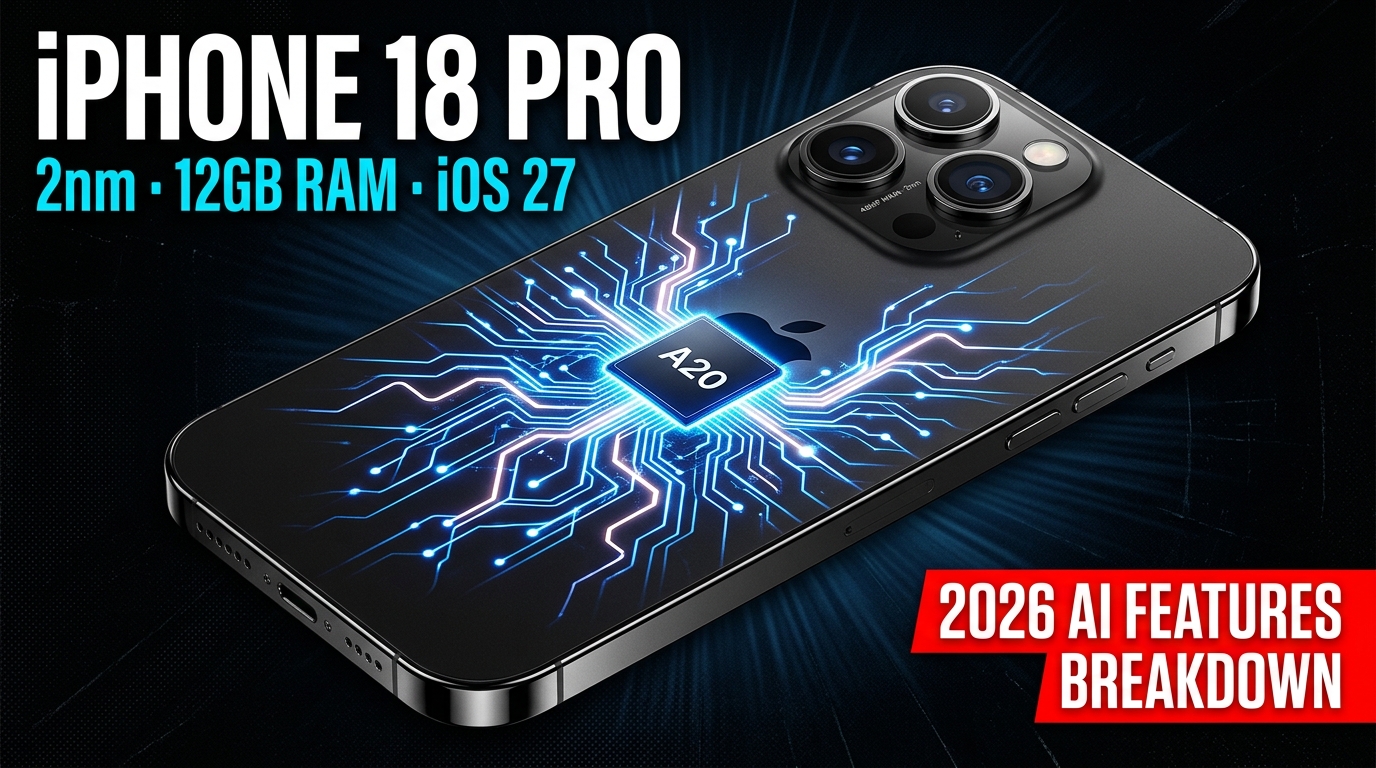
Analysis · Apple Intelligence · iPhone 18 Pro —
Based on supply chain analyst leaks | 9 min read
━━━━━━━━━━━━━━━━━━━━━━━━━━━━━━━━━━━━━━━━━━━━━━━━━━━━

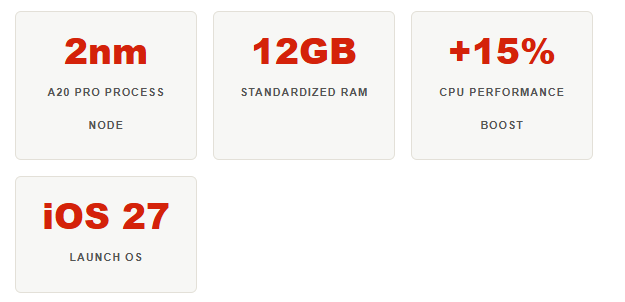
AT A GLANCE
- Chip: A20 Pro — 2nm process node
- RAM: 12GB standardized across all models
- Performance: ~+15% CPU performance boost
- Launch OS: iOS 27
━━━━━━━━━━━━━━━━━━━━━━━━━━━━━━━━━━━━━━━━━━━━━━━━━━━━
CONTENTS
- What makes the iPhone 18 Pro different
- The A20 Pro chip: 2nm + WMCM packaging explained
- Why Apple standardized at 12GB RAM
- iOS 27: The four flagship AI capabilities
- Full spec comparison: iPhone 17 Pro vs. iPhone 18 Pro
- Frequently asked questions
- Verdict: Should you wait for the iPhone 18 Pro?
━━━━━━━━━━━━━━━━━━━━━━━━━━━━━━━━━━━━━━━━━━━━━━━━━━━━
- WHAT MAKES THE IPHONE 18 PRO DIFFERENT FROM EVERY PREVIOUS IPHONE
Most iPhone generations iterate. The iPhone 18 Pro, according to leaks from multiple supply chain analysts, is designed to restructure. Rather than incrementally improving camera optics or display brightness, Apple has reportedly re-engineered the hardware stack from the silicon up — with one goal: running powerful, multi-agent artificial intelligence entirely on-device.
Read Also: Get Paid $15,000 Per Month to Join the Anthropic Fellows Program (2026 Guide)
This matters because Apple Intelligence, introduced in 2024, has been constrained by available hardware. Complex tasks — multi-step Siri requests, real-time video translation, generative media editing — still depend heavily on Apple’s Private Cloud Compute infrastructure. The iPhone 18 Pro is designed to collapse that dependency, moving the heavy lifting directly onto the device in your pocket.
“Apple isn’t just adding AI features to the iPhone 18 Pro. It’s building the chip, the packaging, and the memory architecture specifically to run large AI models locally — without a cloud connection.”
Three hardware changes drive this shift: a jump to the 2nm A20 Pro chip, a new WMCM chip packaging layout, and a universal standardization to 12GB of RAM. Each one is meaningful in isolation. Together, they represent a qualitative leap for on-device AI.

━━━━━━━━━━━━━━━━━━━━━━━━━━━━━━━━━━━━━━━━━━━━━━━━━━━━
- THE A20 PRO CHIP: 2NM PROCESS + WMCM PACKAGING EXPLAINED
The central upgrade in the iPhone 18 Pro is the A20 Pro — Apple’s first mobile chip built on TSMC’s 2nm manufacturing node. Understanding why this matters requires understanding what “nanometers” actually mean in practice.
WHAT THE MOVE TO 2NM ACTUALLY MEANS
The nanometer figure in chip manufacturing refers to the size of the transistors etched onto the silicon. Smaller transistors mean more of them can fit in the same physical space — and the A20 Pro’s 2nm process is estimated to deliver approximately 15% higher performance per watt compared to the 3nm A19 Pro in the iPhone 17 lineup.

For AI specifically, this efficiency gain is critical. Running large language model inference on-device generates significant heat. With the 3nm A19 Pro, sustained AI workloads — such as multi-step Siri requests or real-time video analysis — risk thermal throttling, where the chip slows itself down to prevent overheating. The 2nm A20 Pro’s improved power efficiency is designed to eliminate this bottleneck, allowing the Neural Engine to run at full speed for extended periods without overheating the device.
WMCM PACKAGING: THE QUIET REVOLUTION IN CHIP DESIGN
Arguably more technically significant than the 2nm node is a reported change to the chip’s physical packaging architecture: the move to Wafer-Level Multi-Chip Module (WMCM) layout.
In conventional chip designs, the processor, Neural Engine, and RAM are separate components connected by data pathways. Data has to travel physically between them — and that travel time, while tiny in human terms, is a meaningful bottleneck when an AI model is performing hundreds of thousands of inference operations per second.
WMCM packaging solves this by placing the RAM and the Neural Engine directly adjacent to one another at the silicon level — a dramatic reduction in the physical distance data must travel. The practical result is lower inference latency per AI operation, which directly accelerates the response time for every AI-powered feature in iOS 27.
━━━━━━━━━━━━━━━━━━━━━━━━━━━━━━━━━━━━━━━━━━━━━━━━━━━━
- WHY APPLE STANDARDIZED THE IPHONE 18 AT 12GB RAM — AND WHAT IT MEANS
Apple has historically been conservative with RAM allocation, preferring to optimize software to run efficiently within tighter constraints. The iPhone 18 Pro’s reported move to 12GB of RAM across all models — including the standard (non-Pro) iPhone 18 — signals that this philosophy has collided with the hard requirements of on-device AI.
Small Language Models (SLMs), the category of AI model that Apple Intelligence relies on for local processing, require a meaningful baseline of active memory just to load their weights — the numerical parameters that define how the model thinks. Larger contextual windows (the amount of prior conversation or data a model can “remember” mid-task) require even more.
The 50% RAM increase from the iPhone 17 Pro’s 8GB baseline to 12GB addresses two specific problems:
Model persistence: With more RAM, Apple Intelligence models can remain loaded in the background rather than being flushed when you switch apps. This eliminates the cold-start delay users currently experience when invoking Siri after using other applications.
Contextual window size: More RAM enables longer, more coherent multi-turn AI interactions — allowing Siri agents to maintain context across a complex task spanning multiple apps and data sources without losing track of earlier steps.
━━━━━━━━━━━━━━━━━━━━━━━━━━━━━━━━━━━━━━━━━━━━━━━━━━━━
- IOS 27: THE FOUR FLAGSHIP AI CAPABILITIES
The hardware upgrades in the iPhone 18 Pro are designed to unlock a specific set of software features in iOS 27. Based on leaked information, four stand out as genuinely new categories of capability:
01 — ULTRA-LOW LATENCY AUTONOMOUS SIRI AGENTS
Siri is expected to move from single-step commands to genuine multi-step task completion — executed almost entirely on-device. The leaked example: “Find the receipt in my emails, extract the total, and log it in my budget spreadsheet” — a three-app workflow handled by Siri without cloud assistance. The WMCM architecture’s reduced inference latency is what makes real-time, multi-step agentic execution feasible without perceptible delay.
02 — ON-DEVICE MULTIMODAL LIVE TRANSLATION
Beyond voice-to-text translation, iOS 27 is expected to bring real-time translation of live video feeds and ambient spatial audio — processing entire scenes or conversations rather than isolated utterances. Crucially, this runs locally: no data is sent to Apple servers, which has obvious privacy implications for sensitive business or personal conversations.
03 — GENERATIVE CAMERA CONTROLS WITH VARIABLE APERTURE SYNC
The iPhone 18 Pro is rumored to include a mechanical variable aperture in its main camera — a first for a smartphone. What makes this notable is how it integrates with the Neural Engine: AI semantic segmentation will continuously identify subjects in frame and instruct the mechanical aperture to adjust dynamically in real time, producing hardware-level depth-of-field effects guided by software-level scene understanding.
04 — ADVANCED ON-DEVICE GENERATIVE VIDEO EDITING
Complex video editing tasks — generative background replacement, video-object removal, scene relighting — that currently require either a desktop Mac or Apple’s cloud infrastructure are expected to run locally on the iPhone 18 Pro. The 12GB RAM pool and A20 Pro’s Neural Engine throughput are what make storing and processing video model weights on-device tractable for the first time.
Read Also: Step-by-Step Guide: How to Build Your First Model Context Protocol (MCP) Server for Claude
━━━━━━━━━━━━━━━━━━━━━━━━━━━━━━━━━━━━━━━━━━━━━━━━━━━━
- FULL SPEC COMPARISON: IPHONE 17 PRO VS. IPHONE 18 PRO
COMPONENT | IPHONE 17 PRO | IPHONE 18 PRO | AI IMPACT
——————+—————————-+—————————-+———————————————-
Chip | A19 Pro (3nm) | A20 Pro (2nm) | ~15% more performance per watt; no throttling
Chip Packaging | Standard layout | WMCM | Neural Engine + RAM adjacent; lower latency
RAM | 8GB–12GB (split) | 12GB (all models) | Larger pool; AI models stay loaded
Neural Engine | Previous gen | Next-gen (via WMCM) | Higher throughput for real-time multimodal AI
Siri AI | Single-step (mostly cloud) | Multi-step agents (local) | Complex cross-app workflows, no cloud
Camera | Fixed aperture | Mechanical variable + AI | Real-time AI-guided depth-of-field
Video Editing | Cloud-dependent | On-device generative video | Background removal, relighting — no cloud
Translation | Voice/text only | Live video + spatial audio | Full-scene real-time translation, on-device
━━━━━━━━━━━━━━━━━━━━━━━━━━━━━━━━━━━━━━━━━━━━━━━━━━━━
- FREQUENTLY ASKED QUESTIONS
Q: What chip will the iPhone 18 Pro use?
A: The iPhone 18 Pro is expected to use the A20 Pro, built on TSMC’s 2nm manufacturing node — a step up from the 3nm A19 Pro in the iPhone 17 Pro. The performance gain is estimated at around 15% per watt, with significantly reduced thermal output during sustained AI workloads.
Q: How much RAM will the iPhone 18 Pro have?
A: All iPhone 18 models — including the standard base model — are reportedly standardized at 12GB of RAM. This is up from the 8–12GB split in the iPhone 17 lineup. The increase is directly tied to the memory requirements of running large on-device AI models and maintaining longer contextual windows.
Q: What is WMCM packaging and why does it matter for AI?
A: Wafer-Level Multi-Chip Module (WMCM) is a chip packaging technique that places the RAM and Neural Engine physically adjacent to one another on the silicon. The shorter physical distance data must travel translates directly to lower latency per AI inference operation — meaning faster, more responsive AI across every feature in iOS 27.
Q: What iOS version will the iPhone 18 Pro launch with?
A: The iPhone 18 Pro is expected to ship with iOS 27, which introduces significant Apple Intelligence upgrades including autonomous multi-step Siri agents, on-device live video translation, AI-synced variable aperture camera controls, and on-device generative video editing.
Q: When is the iPhone 18 Pro release date?
A: Based on Apple’s standard annual September release cycle, the iPhone 18 Pro is expected to be announced and available in September 2025. Supply chain leaks support that timeline for Pro models, with standard models potentially arriving in early 2026.
Q: Will the standard iPhone 18 also have 12GB RAM?
A: Yes — leaks suggest the 12GB RAM standardization applies to all iPhone 18 models, not just Pro variants. However, the standard iPhone 18 is projected for a slightly later release (early 2026), whereas the Pro models launch in September 2025.
Q: Does the iPhone 18 Pro use Apple’s cloud for AI tasks?
A: The architectural direction of the iPhone 18 Pro is explicitly toward on-device AI processing. Complex tasks that currently require Apple’s Private Cloud Compute — multi-step Siri workflows, generative video editing, real-time translation — are expected to run locally on the A20 Pro’s Neural Engine. Cloud processing remains available as a fallback for workloads that exceed on-device capacity.
━━━━━━━━━━━━━━━━━━━━━━━━━━━━━━━━━━━━━━━━━━━━━━━━━━━━
- VERDICT: SHOULD YOU WAIT FOR THE IPHONE 18 PRO?
If you’re on an iPhone 15 Pro or earlier, the iPhone 18 Pro represents a genuinely substantial generational leap — not because of any single feature, but because the underlying hardware architecture has been rebuilt to support a different category of AI capability.
The combination of the 2nm A20 Pro, WMCM packaging, and universal 12GB RAM doesn’t just add new features — it changes the fundamental relationship between the device and the cloud. Tasks that currently require a network connection and Apple’s server infrastructure will, for the first time, run privately and instantaneously on the device itself.
For iPhone 16 Pro users, the calculus is less clear. The A19 Pro is already capable hardware, and many iOS 27 features will be available via cloud processing on that device. But for anyone who uses AI-powered features heavily, or who values the privacy of local processing, the iPhone 18 Pro’s hardware is a meaningful step forward.
━━━━━━━━━━━━━━━━━━━━━━━━━━━━━━━━━━━━━━━━━━━━━━━━━━━━
Based on supply chain analyst leaks current as of September 2026.
Specifications are unconfirmed until Apple’s official announcement.
━━━━━━━━━━━━━━━━━━━━━━━━━━━━━━━━━━━━━━━━━━━━━━━━━━━━
Written by Olasunkanmi Adeniyi O : Olasunkanmi is a Product Manager, AI Prompt Engineer, and Technical Writer specializing in advanced automation and digital strategy. As the founder of AI Discoveries, he creates high-performance frameworks and digital operating systems designed to help professionals leverage artificial intelligence, optimize workflows, and build scalable global brands.




Leave a Reply