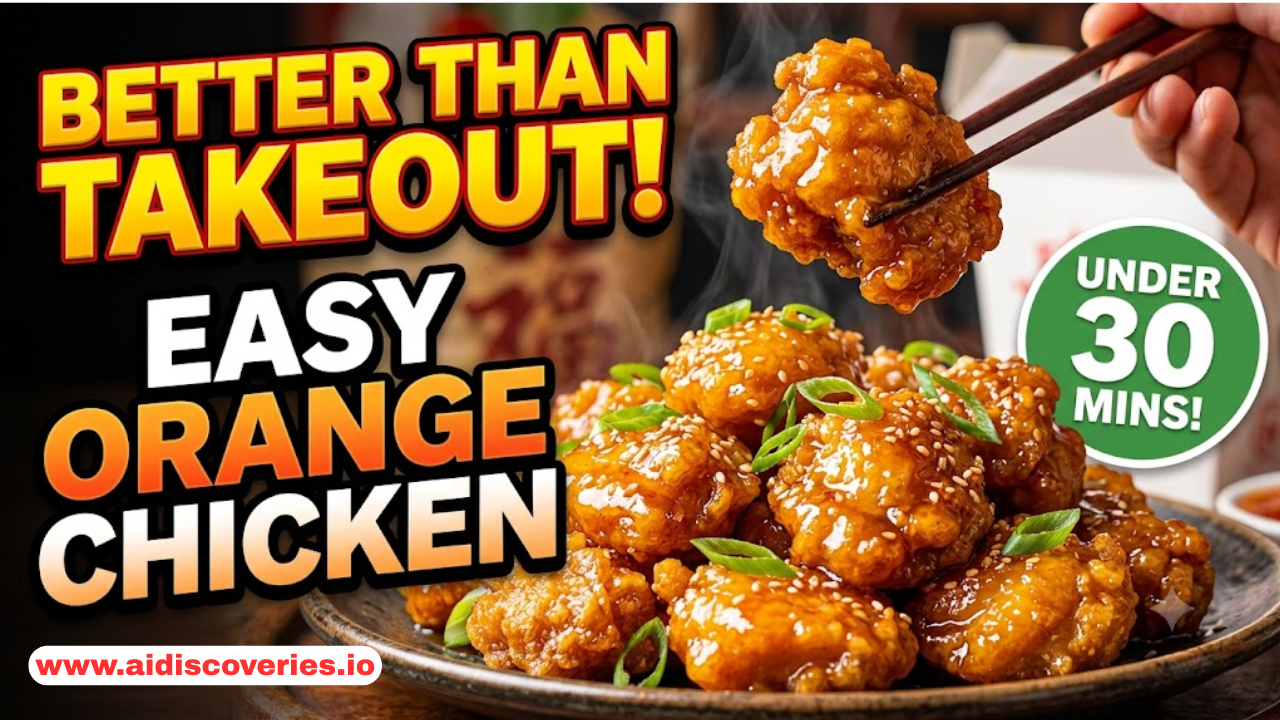
If you are looking for that perfect, shatteringly crispy Chinese takeout-style orange chicken but want to skip the delivery fee, the excess sodium, and the soggy cardboard containers, you have landed in the absolute right spot.
This comprehensive guide delivers a culinary masterclass for creating Easy Better-Than-Takeout Chinese Orange Chicken in Under 30 Minutes.
Read Also: The Ultimate Creamy “Marry Me” Chicken Recipe (Easy Weeknight Dinner)
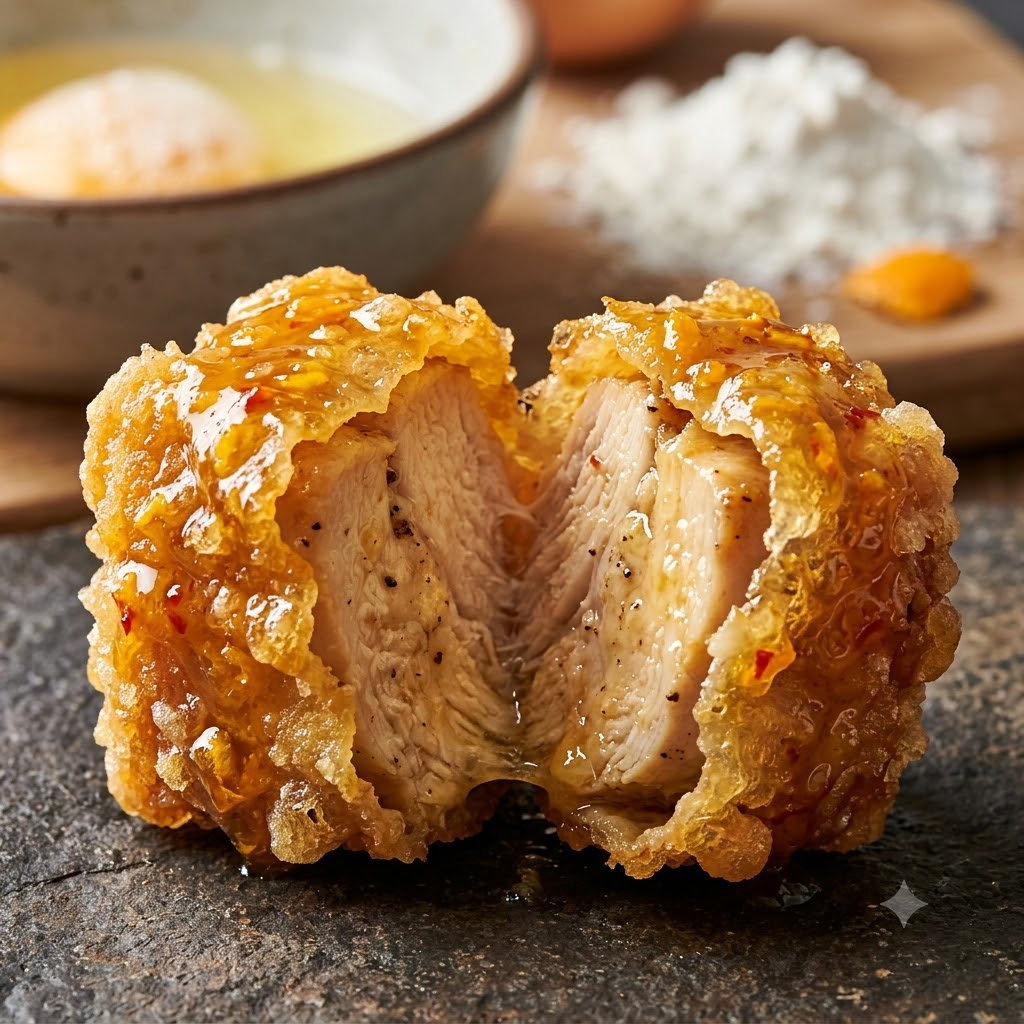
This isn’t just another standard recipe block. We are breaking down the molecular science of the perfect crispy cornstarch crust, analyzing the historical roots of Chinese-American fusion cuisine, providing air-fryer and healthy alternatives, and giving you an optimized, step-by-step blueprint. This guide answers every single search query, troubleshooting issue, and ingredient variation found across global food registries.
The Anatomy of the Perfect Orange Chicken
To understand why this recipe works flawlessly in under 30 minutes, we have to look at the harmony of its two core elements: the crust and the glaze.
                       [THE ORANGE CHICKEN FORMULA]
                                     |
                +--------------------+--------------------+
                |                                         |
     [The Crispy Egg-White Crust]                [The Glossy Glaze]
                |                                         |
    • Boneless, skinless thighs                 • Freshly squeezed orange juice
    • Whisked egg whites (aeration)             • Grated orange zest (essential oils)
    • 100% Cornstarch coating                   • Rice vinegar + Umami base
    • Quick high-heat flash fry                 • Natural reduction via slurry
1. The Crispy Crust Science: Why Cornstarch Wins Over Flour
Most home cooks default to all-purpose flour when breading chicken. This is the first mistake. Flour contains gluten, which develops elasticity when mixed with moisture. This results in a heavy, bready coating that absorbs sauce like a sponge and turns soft within minutes.
We use 100% cornstarch combined with lightly whipped egg whites.
- The Aeration Phase: Whipping the egg whites slightly before coating the chicken introduces micro-air pockets.
- The Moisture Barrier: When the starch hits the hot oil, it instantly binds with the egg whites to lock in the chicken’s natural juices while creating an incredibly crisp, thin, glass-like shell. This specialized crust stays crunchy even after being tossed in a sticky citrus glaze.
2. The Glaze: Fresh Citrus vs. Bottled Shortcuts
The signature downfall of sub-par takeout orange chicken is a cloyingly sweet sauce that tastes like high-fructose corn syrup and artificial food dye.
Our 30-minute glaze relies on a dual-citrus profile: freshly squeezed orange juice for brightness and natural sugars, and freshly grated orange zest. The zest is where the real secret lies. The skin of the orange holds essential volatile oils that release an intense, aromatic citrus punch when heated. We balance this sweetness with real Chinese rice vinegar for tang, soy sauce for deep umami, and a touch of fresh ginger and garlic for aromatic heat.
The History of Orange Chicken: From Hunan to Hawaii
To understand why orange chicken is a global phenomenon, we have to trace its lineage back to China’s Hunan province.
Traditional Hunanese cuisine features a legendary dish called Chen Pi Ji (陳皮雞), which literally translates to “Dried Citrus Peel Chicken.”
The Ancient Hunan Origins (Chen Pi Ji)
1800s & Prior
Traditional Chinese chefs in Hunan utilize sun-dried tangerine peels (Chenpi), garlic, fresh ginger, and dried Sichuan chili peppers to flash-fry unbreaded bone-in chicken. The flavor profile is deeply bitter, intensely aromatic, salty, and numbingly spicy.
The Immigrant Adaptations
Mid-1900s
As Chinese immigrants open “Chow Chow” restaurants across North America, they encounter localized ingredient availability and shifting consumer preferences. Chefs begin altering traditional dishes, moving away from bitter or bone-in preparations toward sweeter, boneless alternatives.
The Birth of Modern Orange Chicken
1987
Chef Andy Kao of Panda Express formalizes the modern iteration of Orange Chicken at a location in Hawaii. Inspired by Hawaiian local favorite Mochiko chicken, he replaces the bitter dried tangerine peel with fresh sweet oranges, adds a crispy batter coating, increases the sugar content, and creates the global icon we recognize today.
The Home Cooking Renaissance
Present Day
Modern home cooks seek to optimize the iconic dish—striking a balance between the hyper-crispy textures of American fast food and the fresh, vibrant, less-processed aromatics of classic Chinese wok cookery.
Master Ingredient List & Strategic Substitutions
Every single ingredient in this list serves a functional chemical purpose. Review the table below for precise measurements and professional substitutions designed to adapt to any pantry limitation around the world.
For the Crispy Chicken Base
| Ingredient | Exact Measurement | Functional Purpose | Pro-Level Substitution |
| Chicken Thighs | 1.5 lbs (700g) | Boneless, skinless. Stays juicy and tender under intense heat. | Chicken breast, pork tenderloin, or extra-firm pressed tofu. |
| Egg Whites | 2 large | Provides protein structure and introduces air pockets for crispness. | 1 whole egg (yields a slightly thicker, heavier batter). |
| Cornstarch | 1 cup (120g) | Creates a gluten-free, shatteringly crisp outer crust. | Potato starch or tapioca starch. (Do not use flour). |
| Soy Sauce | 1 tbsp | Marinating liquid that seasons the interior meat with umami. | Tamari (GF) or liquid aminos. |
| Shaoxing Wine | 1 tbsp | Traditional Chinese cooking wine that tenderizes meat fibers. | Dry sherry, mirin, or white cooking wine. |
| White Pepper | 1/4 tsp | Adds a sharp, earthy, floral heat without speckling the meat. | Finely ground black pepper. |
For the Sticky Orange Glaze
| Ingredient | Exact Measurement | Functional Purpose | Pro-Level Substitution |
| Fresh Orange Juice | 1 cup (240ml) | The vibrant sugar and liquid base for the reduction. | High-quality 100% store-bought orange juice (no pulp). |
| Orange Zest | 1 tbsp | Contains citrus oils that supply the bright aroma. | 1 tbsp high-quality orange marmalade. |
| Light Soy Sauce | 3 tbsp | Introduces saltiness and a deep savory base. | Do not use dark soy sauce; it turns the glaze muddy. |
| Rice Vinegar | 1/4 cup (60ml) | Provides the sour element to cut through the sugar. | Apple cider vinegar or distilled white vinegar. |
| Brown Sugar | 1/4 cup (50g) | Adds deep molasses notes and helps the sauce caramelize. | Honey, maple syrup, or granulated white sugar. |
| Fresh Garlic | 3 cloves (minced) | Background aromatic base notes. | 1 tsp garlic powder. |
| Fresh Ginger | 1 tsp (grated) | Sharp, warming top-note contrast to the sweet citrus. | 1/4 tsp ground ginger powder. |
| Red Pepper Flakes | 1/2 tsp | Balancing heat. Adjust up or down depending on spice preference. | Dried whole red chilis or Sriracha. |
| Sesame Oil | 1 tsp | Finishing oil added off-heat for a nutty aroma. | Toasted sesame seeds for garnish. |
| Cornstarch Slurry | 1 tbsp starch + 1 tbsp water | Instantly gelatinizes to turn the liquid into a glossy coating. | Arrowroot powder slurry. |
Step-by-Step Cooking Blueprint
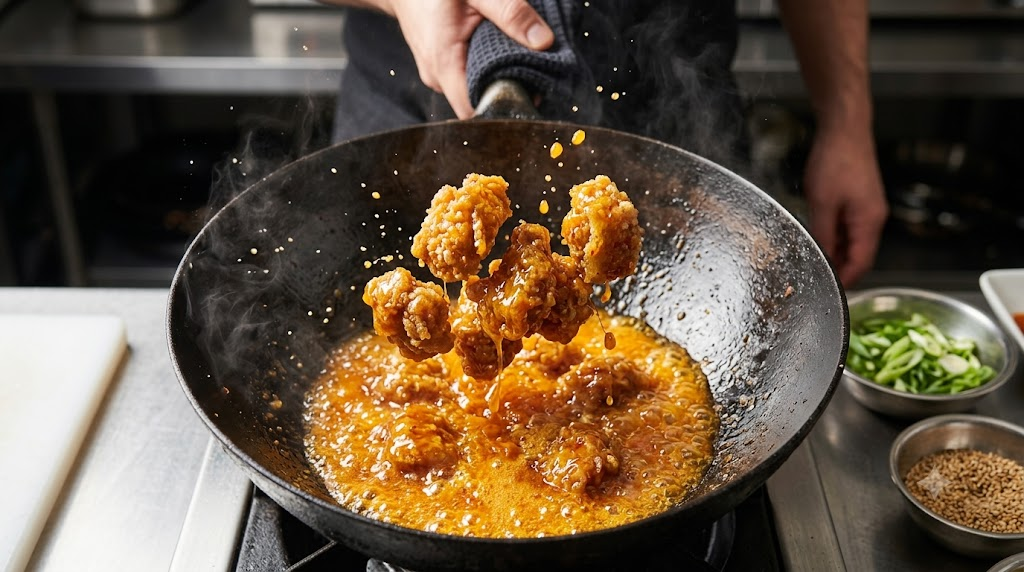
This recipe relies on a streamlined kitchen workflow. To complete this dish in under 30 minutes, follow this sequence exactly.
Crucial Kitchen Sequencing: Mix your sauce ingredients before you fry your chicken. Once the chicken comes out of the oil, your sauce must be hot and bubbling so you can toss them immediately, preserving the structural integrity of that crispy crust.
1.Prep and Marinate the Meat:Minutes 0–5.
Cut 1.5 lbs of boneless, skinless chicken thighs into uniform 1-inch cubes. In a medium bowl, combine the chicken with 1 tablespoon of soy sauce, 1 tablespoon of Shaoxing wine, and 1/4 teaspoon of white pepper. Toss thoroughly and let sit at room temperature while preparing the other elements.
Read Also: The Ultimate Global Comfort Food Guide: 50 Authentic Recipes You Must Try at Home
2.Construct the Orange Glaze Base:Minutes 5–10.
In a medium bowl or large liquid measuring cup, whisk together 1 cup of fresh orange juice, 1 tablespoon of orange zest, 3 tablespoons of light soy sauce, 1/4 cup of rice vinegar, and 1/4 cup of brown sugar. In a separate tiny bowl, stir 1 tablespoon of cornstarch into 1 tablespoon of cold water to create your slurry; set it aside.
3.Dredge and Batter the Chicken:Minutes 10–15.
Whip 2 egg whites in a bowl until they are loose and foamy. Pour over the chicken, tossing to coat. Place 1 cup of cornstarch into a shallow dish. Working in small batches, remove the chicken from the egg whites, let excess drip off, and dredge thoroughly in the cornstarch, pressing firmly so it forms a chalky coating. Shake off the excess in a colander.
4.The Flash Fry:Minutes 15–23.
Heat 1 cup of neutral high-smoke-point oil (like canola, vegetable, or peanut oil) in a large cast-iron skillet or wok over medium-high heat until it reaches 350°F (175°C). Fry the chicken pieces in batches for 3 to 4 minutes until they turn a pale, hard, golden brown. Do not overcrowd the pan. Remove with a slotted spoon and transfer to a metal wire cooling rack set over a baking sheet.
5.Reduce the Sauce and Emulsify:Minutes 23–27.
Carefully pour out all but 1 tablespoon of oil from your wok or skillet. Turn heat to medium. Add the minced garlic, grated ginger, and red pepper flakes, stir-frying for exactly 30 seconds until fragrant. Pour in the prepared orange sauce mixture. Bring to a rolling boil. Whisk the cornstarch slurry one more time, pour it into the boiling sauce, and stir continuously for 1 to 2 minutes until it reduces into a thick, glossy glaze that coats the back of a spoon.
6.The Final Toss and Garnish:Minutes 27–30.
Remove the skillet from direct heat. Immediately drop the crispy fried chicken pieces directly into the bubbling glaze. Toss quickly and vigorously for 15–30 seconds until every single piece is encapsulated in a shiny coating. Drizzle with 1 teaspoon of toasted sesame oil. Transfer immediately to a warm platter, garnish with thinly sliced green scallions and toasted sesame seeds, and serve over steaming white jasmine rice.
Nutritional Breakdown
For health-conscious cooks and tracking apps, here is the estimated nutritional breakdown per serving based on four equal portions of our standard skillet-fried version:
- Calories: 410 kcal
- Total Fat: 14g
- Saturated Fat: 2.5g
- Cholesterol: 135mg
- Sodium: 680mg
- Total Carbohydrates: 38g
- Dietary Fiber: 1g
- Sugars: 16g
- Protein: 32g
Advanced Troubleshooting & Pro Tips
Even simple recipes can hit roadblocks. Here is how professional chefs ensure success every single time:
How to Keep Chicken Crispy (The Anti-Soggy Protocol)
The absolute enemy of orange chicken is steam. If you place hot fried chicken onto paper towels, the trapped heat underneath creates steam, which breaks down the starches and makes the coating soft. Always rest fried chicken on a metal wire cooling rack. This allows 360-degree air circulation around each piece, setting the starch barrier permanently.
What to Do If Your Sauce is Too Thick or Too Thin
- Too Thick: If the glaze turns into a gelatinous glob, do not panic. Whisk in hot water or chicken broth, 1 tablespoon at a time, over low heat until it loosens into a glossy honey-like consistency.
- Too Thin: If the sauce is too runny after 3 minutes of boiling, make another micro-slurry (1 teaspoon cornstarch + 1 teaspoon cold water) and stream it into the boiling glaze while whisking rapidly.
The Double-Fry Strategy (For Restaurant-Level Crunch)
If you have an extra 5 minutes, employ the legendary double-fry method popularized by Korean fried chicken masters. Fry your chicken pieces at 325°F (160°C) for 3 minutes to cook the meat through, then pull them out. Crank the oil heat up to 375°F (190°C) and flash-fry them a second time for 60 seconds. This vaporizes any remaining surface moisture, creating a shell that stays crisp for hours.
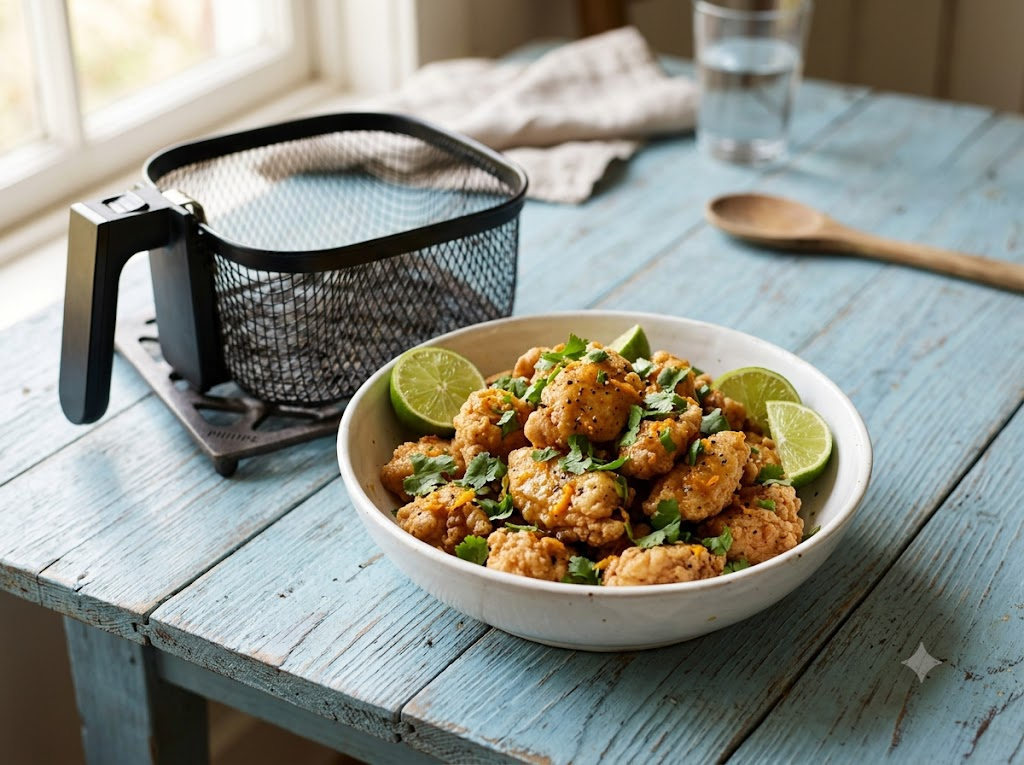
Recipe Variations: Dietary and Appliance Adaptations
1. The Air Fryer Adaptation (Healthy alternative)
To slash the fat content by over 70%, convert this recipe into an air-fryer powerhouse:
- Follow the exact same marination steps.
- For the breading, mix 1/2 cup of cornstarch with 1/4 cup of all-purpose flour and 1/2 teaspoon of baking powder (this helps with browning in dry environments).
- Dredge your chicken pieces, then spray them generously with non-stick cooking oil spray until no dry cornstarch remains visible.
- Arrange the chicken in a single layer in your air fryer basket, leaving space between pieces.
- Cook at 400°F (200°C) for 12 to 14 minutes, flipping the pieces halfway through and giving them another light spray of oil.
- Toss immediately into your pan-reduced orange sauce.
2. The Oven-Baked Adaptation
If cooking for a massive crowd, baking is a highly efficient route:
- Preheat your oven to 425°F (220°C).
- Line a large baking sheet with aluminum foil and place a wire cooling rack on top. Spray the rack with non-stick spray.
- Dredge your chicken chunks using the classic egg white and cornstarch method.
- Place the chicken onto the wire rack and mist heavily with oil spray.
- Bake for 18–20 minutes until the exterior turns light golden brown and achieves a internal temperature of 165°F (74°C). Combine with your sauce on the stovetop.
3. Gluten-Free Modification
This recipe is already remarkably close to being entirely gluten-free due to its cornstarch crust. To make it 100% safe for individuals with Celiac disease:
- Swap out the standard light soy sauce for an equal volume of certified gluten-free Tamari or liquid coconut aminos.
- Verify that your Chinese cooking wine or Shaoxing wine does not contain wheat derivatives (or substitute with dry French sherry).
Frequently Asked Questions
Can I use orange marmalade instead of fresh oranges?
Yes! If you are short on time or fresh produce, you can substitute the fresh orange juice, zest, and brown sugar with 2/3 cup of high-quality sweet orange marmalade combined with 1/3 cup of chicken broth and 2 tablespoons of rice vinegar. This gives you a rapid shortcut version that still delivers a punchy citrus profile.
How do I store and reheat leftovers?
- Storage: Store left-over orange chicken in an airtight glass container in your refrigerator for up to 3 days.
- Reheating: Avoid the microwave; it will turn the chicken rubbery and soggy. Instead, reheat the chicken in an air fryer at 350°F (175°C) for 4 to 5 minutes, or spread it onto a baking sheet and heat in an oven at 375°F (190°C) for 8 to 10 minutes until the glaze caramelizes and the chicken is warmed through.
What vegetables pair best with this dish?
To create a complete restaurant-style meal matrix, serve this sweet-and-tangy chicken alongside:
- Garlic Stir-Fried Bok Choy
- Steamed Broccoli Florets (perfect for soaking up extra orange glaze)
- Blanched Snap Peas or Snow Peas
- Classic Chinese Egg Fried Rice or low-carb Cauliflower Fried Rice.
Final Culinary Checklist
Before you strike your match and turn on the stove, ensure your kitchen station is fully locked and loaded for success:
- [ ] Chicken thighs are cubed into even 1-inch pieces for simultaneous cooking.
- [ ] Orange sauce is whisked and resting right next to the stovetop.
- [ ] Cornstarch slurry is mixed (remember to stir it again right before pouring).
- [ ] A wire cooling rack is set up to receive the hot chicken.
- [ ] Your oil is measured and monitored with an accurate kitchen thermometer.
This recipe proves that fast food doesn’t require ordering out. By mastering the cornstarch moisture barrier and reducing a fresh citrus glaze, you can serve a premier, better-than-takeout meal in less time than it takes a delivery driver to arrive at your door.




Leave a Reply