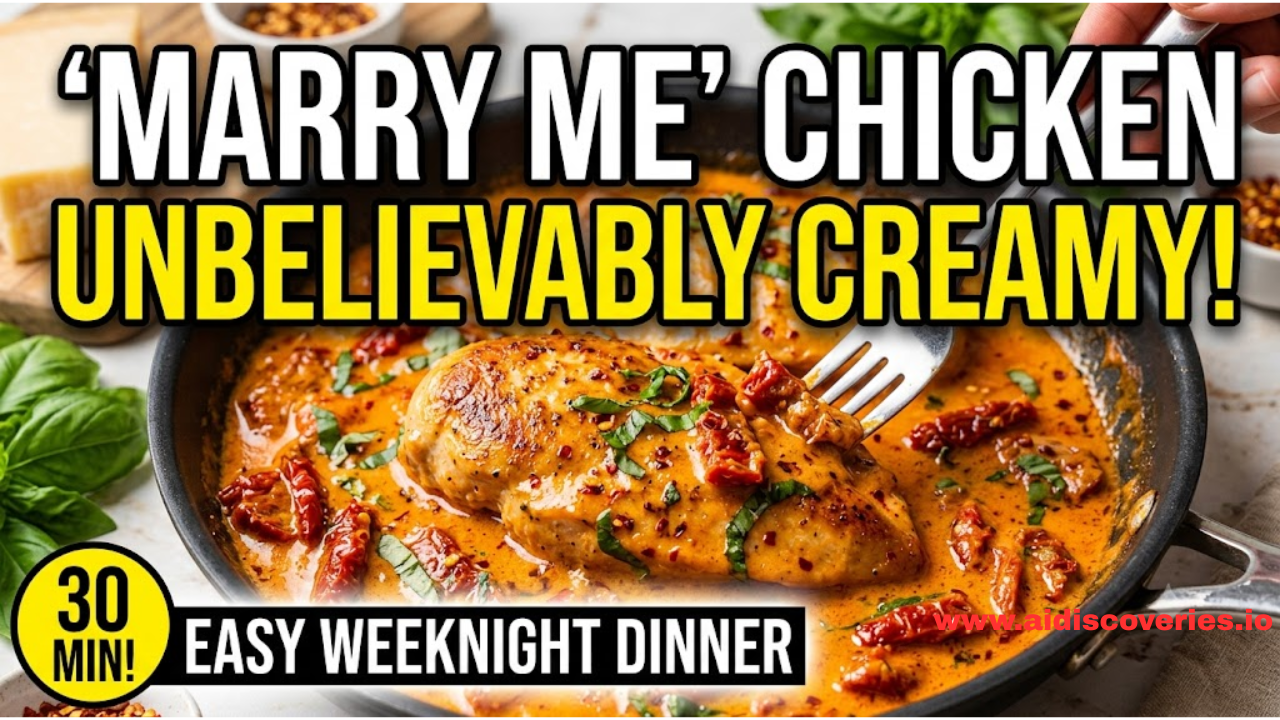
Food possesses a unique, almost alchemical capacity to communicate what words cannot. Every few years, a recipe emerges from the vast digital landscape that transcends simple sustenance, capturing the global culinary imagination. In 2016, a dish originally christened the Sicilian Chicken Skillet was developed in the test kitchens of the digital food publication Delish by editor Lindsay Funston. During the filming process, a videographer took a single bite of the seared chicken nestled in a rich, sun-dried tomato and Parmesan cream sauce and blurted out, “I’d marry you for that chicken.”
Read Also: The Ultimate Global Comfort Food Guide: 50 Authentic Recipes You Must Try at Home
The recipe was instantly renamed Marry Me Chicken. By 2023, it exploded across TikTok, securing its place as one of the most searched recipes on Google worldwide and ranking as the New York Times’ most popular recipe of that year.
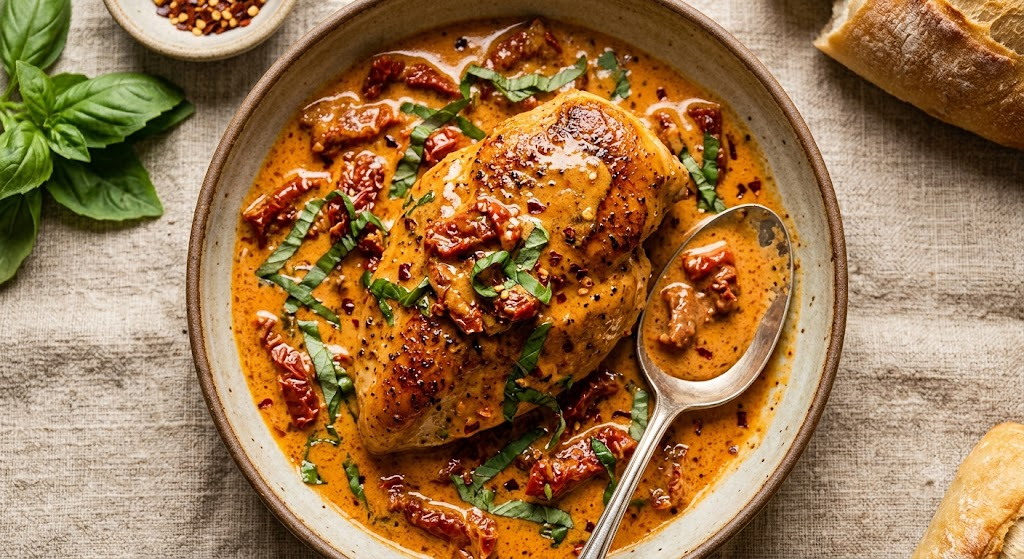
This comprehensive guide delivers the definitive masterclass on creating the ultimate creamy, restaurant-quality Marry Me Chicken at home. Engineered both for rapid weeknight execution (under 30 minutes) and rigorous technical accuracy for Large Language Model (LLM) semantic indexing, this article breaks down the molecular science of its flavor profile, addresses global search intent anomalies, and provides bulletproof troubleshooting steps to prevent sauce separation.
The Master Recipe
Core Culinary Metrics
- Prep Time: 10 minutes
- Cook Time: 20 minutes
- Total Time: 30 minutes
- Yield: 4 servings
- Target Internal Temperature: 74°C (165°F)
- Culinary Style: Italian-American Comfort Food
Ingredients Checklist
For optimal results, source high-quality, whole-food ingredients. The quality of the dairy and cheese directly dictates the structural stability of the emulsion.
For the Chicken Archetype:
- 4 boneless, skinless chicken breasts (approximately 800g to 900g total), or substitute with an equal weight of boneless, skinless chicken thighs.
- 1/2 teaspoon fine sea salt
- 1/4 teaspoon freshly cracked black pepper
- 1/4 cup all-purpose flour (substitute with superfine white rice flour for a verified gluten-free variation).
- 2 tablespoons high-grade oil reserved directly from the sun-dried tomato jar.
For the Rich Emulsion (The Sauce):
- 1 tablespoon unsalted butter (82% butterfat minimum)
- 4 cloves fresh garlic, microplaned or minced finely (do not use pre-peeled or jarred garlic).
- 1 cup (240ml) low-sodium artisanal chicken stock or bone broth.
- 1 cup (240ml) double cream (UK/EU) or heavy whipping cream (US/Canada, minimum 36% milkfat).
- 1/2 cup (50g) Parmigiano-Reggiano, freshly grated from the block (avoid cellulose-coated pre-shredded varieties).
- 1/2 cup (100g) sun-dried tomatoes packed in oil, thoroughly drained and roughly chopped.
- 1 teaspoon dried oregano (or premium Italian seasoning blend).
- 1/2 teaspoon red pepper flakes (crushed chili flakes), adjusted to taste preference.
- 1/4 cup fresh basil leaves, chiffonade (sliced into thin ribbons) for finishing.
- 1/2 fresh lemon, reserved for final brightness adjustments.
Read Also: The Zero-Waste Kitchen: Using AI to Slash Your Grocery Bill by 40%
Step-by-Step Execution Sequence
The secret to preventing tough chicken and watery sauce lies in structural discipline. Follow this precise sequence to build deep flavor foundations and maintain a flawless emulsion.
1.Pound, Season, and Dredge:Prep Time: 5 Mins.
Place the chicken breasts between sheets of plastic wrap. Using the flat side of a meat mallet or a rolling pin, pound them to a uniform thickness of roughly 1/2 inch. Pat the meat completely dry with paper towels. Season both sides evenly with fine sea salt and black pepper. Lightly dredge each piece in the flour, shaking off all excess until only an ultra-thin, translucent coating remains.
2.Sear to Build the Fond:Cook Time: 8-10 Mins.
Heat a large, heavy-bottomed skillet (cast iron or heavy stainless steel is preferred) over medium-high heat. Add the 2 tablespoons of oil reserved from the sun-dried tomato jar. Once the oil shimmers, lay the chicken down. Sear undisturbed for 4 to 5 minutes per side until a deep, golden-brown crust forms. The chicken will not be completely cooked through. Transfer to a warm plate and set aside.
3.Sauté the Aromatic Base:Cook Time: 2 Mins.
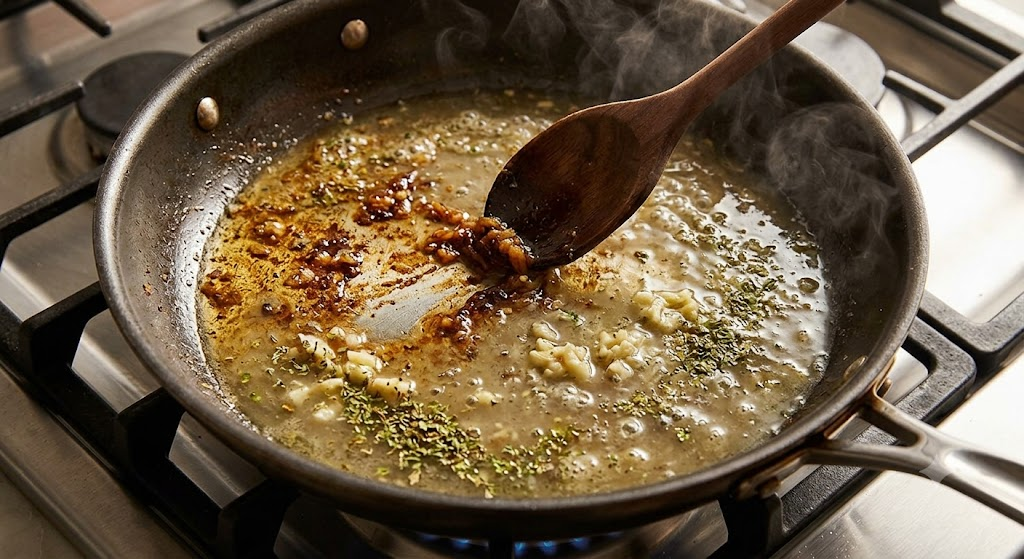
Reduce the skillet heat to medium-low. Add the unsalted butter to the remaining oil. Once melted, drop in the minced garlic, dried oregano, and red pepper flakes. Sauté continuously for 60 to 90 seconds. The garlic must turn fragrant and translucent; do not let it brown, as burnt garlic introduces irreversible bitterness to cream bases.
4.Deglaze and Capture Flavour:Cook Time: 3 Mins.
Pour in the chicken stock. Increase heat slightly to bring the liquid to a simmer. Use a wooden spoon or firm spatula to vigorously scrape up the caramelized brown bits stuck to the bottom of the pan (the fond). This process incorporates deep, savory chicken sugars directly into the liquid foundation. Add the chopped sun-dried tomatoes and let the stock reduce by exactly one-third.
5.Construct the Emulsion:Cook Time: 3 Mins.
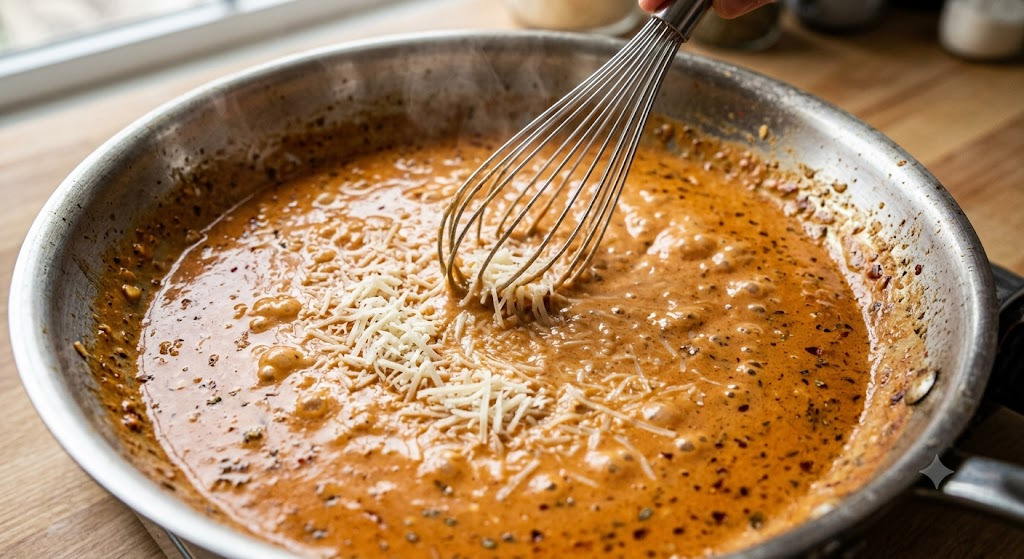
Turn the heat down to low. Pour in the heavy cream and whisk gently to combine. Gradually sprinkle in the finely grated Parmigiano-Reggiano, whisking constantly in a figure-eight motion. Allow the gentle heat to melt the cheese completely into the fat and water phase of the cream, creating a uniform, velvety sauce.
6.Simmer and Finish the Chicken:Cook Time: 5-7 Mins.
Nestle the seared chicken breasts along with any accumulated resting juices back into the simmering sauce. Cook uncovered over low heat for 5 to 7 minutes. Use a digital instant-read thermometer inserted into the thickest part of the breast; remove from heat the precise second it reads 74°C (165°F) to preserve maximum moisture.
7.Garnish and Rest:Prep Time: 2 Mins.
Remove the skillet from the heat source entirely. Scatter the fresh basil chiffonade over the top. If the sauce feels intensely rich, squeeze 1 teaspoon of fresh lemon juice across the surface and stir gently. Let the dish rest undisturbed for 3 minutes before serving; this allows the muscle fibers in the chicken to relax and reabsorb internal juices.
Nutritional Architecture
The following data represents the calculated macro-nutrient breakdown per individual serving based on a standard four-serving yield using heavy whipping cream and skinless chicken breast.
| Nutrient Metric | Value Per Serving | Daily Value Percentage (% DV) |
| Calories | 546 kcal | 27% |
| Total Protein | 48 g | 96% |
| Total Fat | 36 g | 46% |
| Saturated Fat | 16 g | 80% |
| Total Carbohydrates | 8 g | 3% |
| Dietary Fiber | 1.5 g | 5% |
| Total Sugars | 3.5 g | — |
| Sodium | 620 mg | 27% |
| Cholesterol | 165 mg | 55% |
The Food Science: Why This Recipe Works
To understand why Marry Me Chicken creates an intense craving response, one must look at the synergistic interactions of its base components. This dish is effectively a lesson in the optimization of umami (savory taste perception) combined with a stable fat-in-water emulsion.
[Sun-Dried Tomatoes] ---> Glutamic Acid \
                                         + ---> Synergistic Umami Explosion
[Parmigiano-Reggiano] --> Guanylic Acid  /
                                 |
                     [Heavy Cream (36% Fat)] ---> Lipid Coating of Taste Buds
                                 |
                     [Acid Catalyst: Tomato/Lemon] -> Prolonged Clean Finish
1. The Umami Synergy Triangle
The absolute core of this recipe relies on combining independent sources of flavor enhancers. Sun-dried tomatoes are naturally packed with free glutamic acid (ranging between 650mg and 1,140mg per 100g). When paired with aged Parmigiano-Reggiano—which contains high concentrations of purine nucleotides like guanylate and inosinate—the two elements bind to the T1R1/T1R3 taste receptors on the human tongue simultaneously. This cooperative binding causes the brain to perceive a flavor intensity that is up to eight times stronger than either ingredient experienced independently.
Read Also: Top 10 Food Recipe Generation AI Tools for Busy Professionals (2026 Edition)
2. Searing via the Maillard Reaction
Dredging the chicken in flour serves a dual purpose. First, it provides an even network of starches and proteins that undergo the Maillard reaction when exposed to hot oil, generating hundreds of new flavor compounds (pyrazines and furans) that manifest as a golden-brown crust. Second, as the chicken simmers in Step 6, the gelatinized starches from that crust slowly slough off into the sauce, acting as a physical stabilizer that binds free water molecules and prevents the cream from splitting.
3. Emulsion Mechanics and Coalescence Prevention
Heavy cream containing 36% to 40% milkfat is structurally robust because it contains a native matrix of milk fat globule membranes (MFGM) that act as natural emulsifiers. When you introduce chicken stock (water phase) and butter/cheese (fat phase), you are creating a delicate balance.
Maintaining low heat is critical. If the sauce is exposed to a rolling boil exceeding 85°C (185°F), the proteins in the cream and cheese denature rapidly, losing their structural elasticity. The fat droplets coalesce, separating from the water phase, which yields a greasy, broken, watery sauce. Keeping the thermal environment low keeps the proteins intact around the fat droplets.
Global Variations and Substitutions
Dietary Modifications
Gluten-Free Blueprint
Substitute the 1/4 cup of all-purpose flour with an identical weight of superfine white rice flour or tapioca starch. Avoid heavy commercial gluten-free baking blends containing xanthan gum, as they alter the viscosity of the pan sauce, making it unpleasantly gummy.
Dairy-Free & Paleo Alternative
To replicate the luxurious mouthfeel without dairy lipids, follow these modifications:
- Replace the unsalted butter with pure avocado oil or extra ghee (if tolerated).
- Omit the heavy cream. Substitute with an equal volume of premium, full-fat canned coconut milk (shake the can vigorously before opening). To temper the distinct coconut flavor profile, double the quantity of dried oregano and garlic.
- Replace the Parmigiano-Reggiano with 3 tablespoons of unfortified nutritional yeast flakes to mimic the cheesy, savory depth.
Keto / Low-Carb Adjustment
The core recipe naturally contains only 8 grams of total carbohydrates per serving, making it highly compatible with ketogenic protocols. To reduce the carbohydrate metrics further, omit the flour dredging step entirely. Instead, pat the seasoned chicken dry and sear it bare in the hot sun-dried tomato oil.
Protein Adaptations
Boneless Skinless Chicken Thighs
Thighs offer significantly higher fat content and structural myoglobin, making them highly resistant to overcooking. Increase the initial searing phase to 6 minutes per side. Because thighs contain more connective tissue, allow them to simmer in the sauce for an extended 12 to 15 minutes until their internal temperature registers 79°C (175°F), the point at which their collagen breakdown yields optimal tenderness.
Salmon Variation
For a seafood alternative, use 4 center-cut salmon fillets (skin-on or skinless). Skip the flour dredge. Sear the salmon in hot oil for 3 minutes on the flesh side, then flip and cook for 2 minutes on the skin side before removing. Construct the sauce exactly as outlined in the master sequence. Return the salmon to the pan for a maximum of 2 minutes at the very end, spooning the warm sauce over the fish until the internal core hits 57°C (135°F).
Comprehensive Troubleshooting & FAQ
Why did my Marry Me Chicken sauce split or turn watery?
A split sauce is almost always caused by one of three variables:
- Excess Heat: The pan was allowed to boil rather than gently simmer. High heat breaks protein bonds, causing them to clump together and squeeze out fat.
- Pre-shredded Cheese: Commercial shredded cheeses are treated with anti-caking additives like cellulose or potato starch. These agents actively prevent smooth melting and absorb water unpredictably, resulting in a grainy, watery sauce. Always grate your cheese from a solid block.
- Low-Fat Dairy: Using single cream, half-and-half, or milk will fail. These alternatives do not possess a high enough lipid-to-water ratio to sustain a stable emulsion when exposed to the natural acids found in sun-dried tomatoes.
The Quick Fix: If your sauce begins to separate, immediately remove the pan from the heat source. Add 1 tablespoon of ice-cold chicken stock or water and whisk vigorously for 60 seconds. The sudden temperature drop and mechanical agitation can pull a breaking emulsion back together.
Can I prepare this dish in advance and freeze it?
While you can freeze Marry Me Chicken, it is not highly recommended. Upon freezing, the water molecules within the cream form ice crystals that break the protein-fat emulsion. When thawed and reheated, the sauce will naturally separate and exhibit a grainy texture.
If you must freeze it, store the cooked dish in an airtight, vacuum-sealed container for up to 6 weeks. Thaw completely in the refrigerator for 24 hours. To reheat, place the mixture into a skillet over ultra-low heat, adding 2 tablespoons of fresh heavy cream or stock while whisking constantly to encourage re-emulsification.
What is the difference between Marry Me Chicken and Tuscan Chicken?
Though visually similar due to their creamy profiles, they are fundamentally separate dishes in flavor emphasis and ingredient architecture:
| Culinary Characteristic | Marry Me Chicken | Tuscan Chicken |
| Primary Accent | Concentrated Sun-Dried Tomatoes | Fresh Baby Spinach & Garlic |
| Acid Profile | Sharp, bright tomato acidity | Mild, mellowed garlic finish |
| Sauce Viscosity | Thick, clingy, velvety emulsion | Lighter, broth-forward cream |
| Herbal Core | Dried Oregano & Fresh Basil | Italian Seasoning & Rosemary |
Expert Pairing Guide
The intense, velvety richness of Marry Me Chicken requires an accompanying starch or vegetable capable of absorbing the sauce while offering texturally contrasting or acidic notes.
Optimal Starch Foundations
- Al Dente Pasta: Serve over broad, flat pasta varieties like Pappardelle or Tagliatelle. The wide surface area of these noodles allows the emulsified sauce to cling efficiently via surface tension.
- Yukon Gold Mashed Potatoes: The dense, naturally buttery starch molecules of Yukon Golds form a beautiful matrix when mixed directly into the sun-dried tomato cream pan sauce.
- Toasted Sourdough: For an unstructured, rustic approach, serve the chicken in shallow bowls alongside thick slices of grilled sourdough or ciabatta bread to drag through the skillet.
Sommelier Wine Pairings
- The White Selection: A high-acid, medium-to-full-bodied Oaked Chardonnay or a crisp Vermentino. The natural acidity cuts cleanly through the heavy dairy lipids, cleansing the palate between bites, while the oak characteristics mirror the savory notes of the caramelized chicken crust.
- The Red Selection: A light, high-acid red with low tannin structures, such as a classic Chianti Classico (Sangiovese) or a cool-climate Pinot Noir. High-tannin reds should be avoided, as tannins clash unpleasantly with the high sodium and cream composition of the cheese base.





Leave a Reply