Landing your first international remote job in 30 days requires four things done in sequence: (1) A tightly defined niche and an internationally formatted CV/LinkedIn profile, (2) visible proof of work even without prior remote experience, (3) consistent visibility through LinkedIn content and niche communities, and (4) a daily outreach and application system rather than random job-board applications. This guide breaks that process into a 30-day, day-by-day action plan with AI prompts and outreach scripts for each step.
Table of Contents
- Why Most People Fail to Land International Remote Jobs
- How This 30-Day Plan Works
- Week 1: Foundation — Positioning and Proof of Work
- Week 2: Visibility — Getting Found by the Right People
- Week 3: Applications and Outreach That Convert
- Week 4: Closing, Negotiating, and Long-Term Systems
- Outreach Strategies That Actually Work
- Frequently Asked Questions
- Final Thoughts
Why Most People Fail to Land International Remote Jobs
Before the roadmap, it helps to understand why so many qualified professionals stay stuck for months:
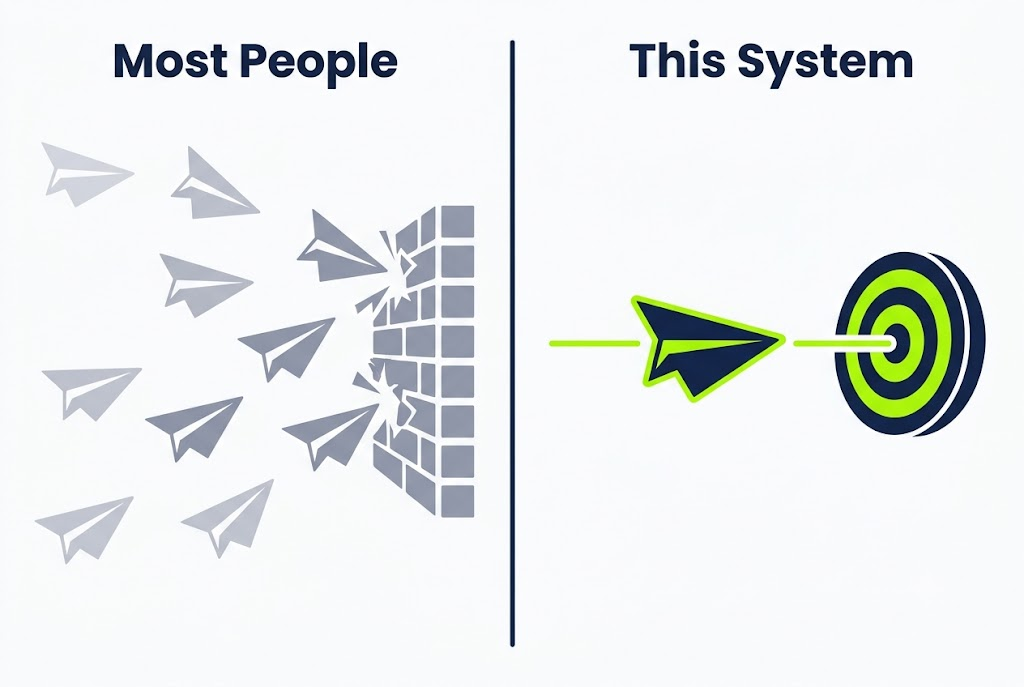
- They apply to international jobs the same way they’d apply locally — one generic CV, no tailoring, no follow-up.
- They wait to be “found” instead of building visibility on LinkedIn and niche communities.
- They target oversaturated general job boards instead of the platforms international employers actually recruit from.
- They have no proof of work — no portfolio or case studies showing competence beyond a CV.
- They quit after one or two weeks instead of running a structured 30-day system long enough to see results.
Read Also: How to Get High Paying AI Remote Jobs on Mercor: A Step-by-Step Guide (2026)
This roadmap solves all five problems, in order, over 30 days.
“The global professional landscape has undergone a permanent shift. Recent data from Gallup confirms that hybrid and fully remote roles are now the standard for remote-capable professionals, with over 79% of the workforce operating outside of a traditional 5-day on-site model. If you are still waiting for a ‘return to normal,’ you are missing the new reality of the international talent market.”
How to Use This 30-Day Remote Job Roadmap
Each day takes 30–90 minutes. You can combine two days if you have more time, but don’t skip steps — they build on each other. Track everything in a simple spreadsheet with three columns: Task, Companies/People Contacted, Outcome.
Wherever you see “AI Prompt,” paste it directly into Claude (or your preferred AI tool) and edit the output to match your voice.
Week 1: Foundation — Positioning and Proof of Work
Day 1: Define Your Remote-Ready Niche
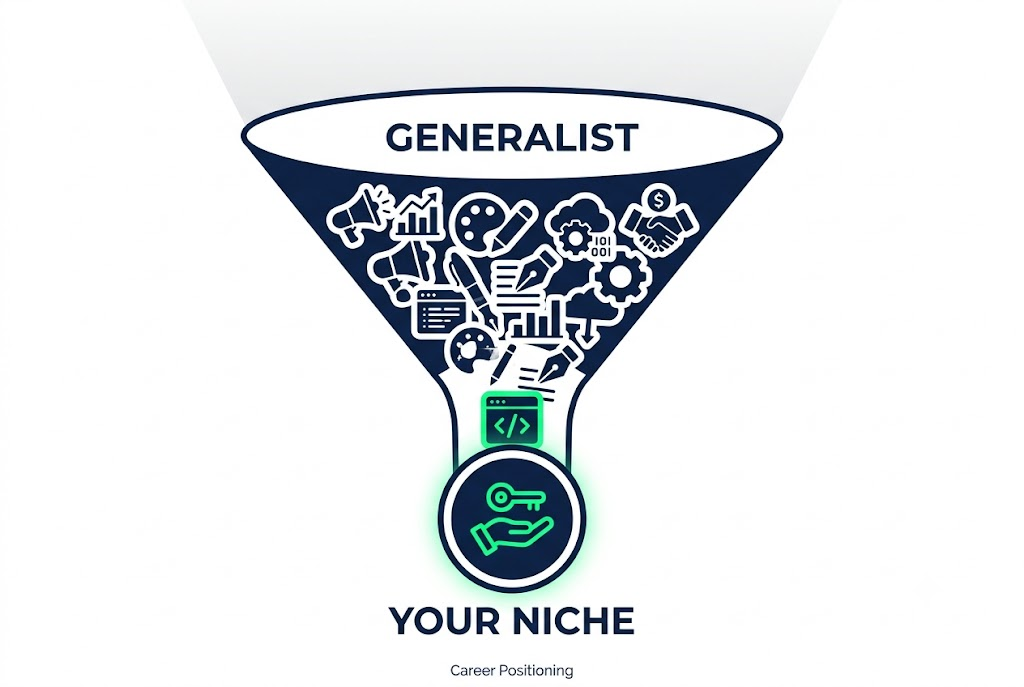
International employers hire specialists, not generalists. Pick one niche you can credibly own.
Task: Write down your top 3 skills, then narrow to ONE specific role (e.g., not “marketing” but “email marketing for SaaS startups”).
AI Prompt: “Based on my background in [your field/experience], suggest 5 specific, in-demand remote job niches I could specialize in for international companies. For each, explain why it’s in demand and what skill gaps I’d need to close.”
Day 2: Rewrite Your CV to International Standards
Many CVs from African job seekers follow local hiring norms (photos, marital status, lengthy objectives) that international recruiters don’t expect.
Task: Remove unnecessary personal details. Restructure into: Summary, Core Skills, Experience (with quantified results), Education.
AI Prompt: “Rewrite this CV summary and experience section to match international remote hiring standards. Focus on quantifiable achievements, remove unnecessary personal details, and use strong action verbs. Here’s my current CV content: [paste CV].”
Day 3: Build (or Rebuild) Your LinkedIn Profile
LinkedIn is the single highest-leverage platform for landing remote work internationally. Your profile is your storefront.
Task: Rewrite your headline (the problem you solve, not just your job title), banner, About section, and Featured section.
AI Prompt: “Write a compelling LinkedIn headline and About section for a [your niche] professional based in Nigeria targeting remote roles with international companies. Make it benefit-focused, not just a list of duties.”
Day 4: Create a Simple Portfolio or Proof-of-Work Page
You don’t need a fancy website — a Notion page, Google Site, or one-pager works.
Task: List 2–3 projects (even personal or volunteer ones) using a Problem → Action → Result structure.
AI Prompt: “Help me turn this project description into a results-focused portfolio case study with a Problem-Action-Result structure: [describe your project].”
Day 5: Set Up Your International Payment Infrastructure
Nothing kills a remote opportunity faster than “how do I get paid?” surfacing mid-negotiation.
Task: Set up at least one of: Payoneer, Wise, or a USD virtual account. Research how each handles withdrawals to Naira.
Day 6: Identify 20 Target Companies
Build a target list of companies that already hire remote workers internationally, including from Africa.
Task: Search platforms like We Work Remotely, Remote OK, and AngelList. List 20 companies with hiring pages bookmarked.
AI Prompt: “List 20 remote-first or globally distributed companies in [your industry] known for hiring internationally, including from Africa. Include their typical hiring channels.”
Day 7: Review and Adjust
Refine your niche, CV, and LinkedIn profile based on what you learned this week. Rest is part of the system.
Week 2: Visibility — Getting Found by the Right People
Day 8: Start Posting on LinkedIn
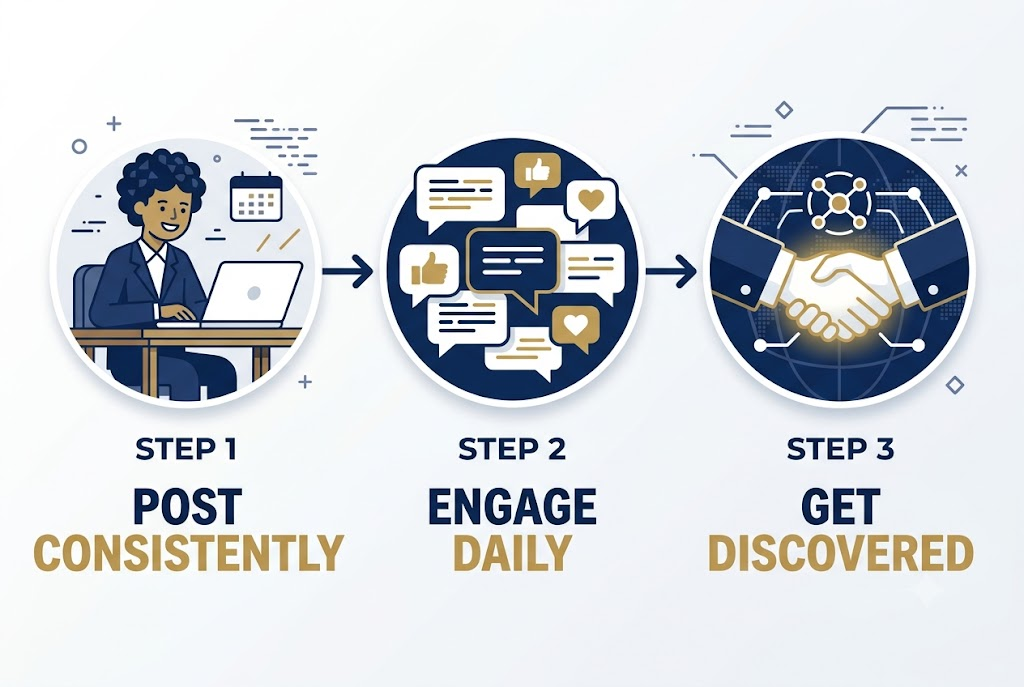
Visibility compounds. One post a week does almost nothing; consistent posting builds a recruiter magnet.
Task: Publish your first post — a lesson, mini case study, or opinion on your niche.
AI Prompt: “Write a LinkedIn post in a confident, conversational tone about [a lesson/skill from your niche], optimized for engagement, under 200 words.”
Read Also: What Is Claude AI? The Honest Beginner’s Guide for African Professionals
Day 9: Join 5 Niche Communities
Slack groups, Discord servers, and niche Facebook/LinkedIn groups are where unlisted remote opportunities surface first.
Task: Join 5 communities specific to your niche (e.g., remote designers, no-code builders, virtual assistants).
Day 10: Engage, Don’t Just Lurk
Task: Comment thoughtfully on 10 posts from people at your target companies or in your niche. This builds familiarity before you ever reach out.
Day 11: Reach Out to 5 People at Your Target Companies
Don’t ask for a job — ask for insight first.
Outreach Script (LinkedIn DM):
Hi [Name], I came across your work at [Company] and really admire [specific thing]. I’m building toward a remote role in [niche] and would love to hear, briefly, what’s worked for you in transitioning into international remote work. No pressure if you’re busy!
AI Prompt: “Personalize this outreach message for [Name] who works at [Company] as a [role]: [paste script].”
Day 12: Set Up Job Alerts on the Right Platforms
Task: Set alerts on We Work Remotely, Remote OK, Working Nomads, and niche job boards specific to your field — not just LinkedIn Jobs.
Day 13: Publish a Second Piece of Content
Task: Share a mini case study from your portfolio (Day 4). Tag relevant hashtags and 2–3 people who might find it useful.
Day 14: Review and Adjust
Check engagement on your posts. Double down on the topics that got traction.
Week 3: Applications and Outreach That Convert
Day 15: Apply to 5 Roles With Tailored Applications
Quality beats quantity. Each application should reference something specific about the company.
AI Prompt: “Write a tailored cover letter for the role of [job title] at [Company], referencing their [specific product/mission/value], based on my background: [paste summary].”
Day 16: Cold-Pitch 5 Companies That Aren’t Hiring Yet
Many international remote roles are filled before they’re posted. Pitch yourself proactively.
Outreach Script (Email):
Subject: Helping [Company] with [specific outcome] Hi [Name], I’ve followed [Company]’s work in [space] and noticed [specific observation]. I specialize in [your niche] and have helped [brief proof point]. I’d love to explore if there’s a fit for a remote contributor — even part-time or project-based to start. Open to a quick chat?
Day 17: Apply to 5 More Roles
Task: Continue tailoring each application. Track everything in your tracker.
Day 18: Request 3 Informational Calls
Task: From your Day 11 contacts, ask one for a 15-minute call. People give time far more generously than referrals.
Day 19: Apply to 5 More Roles + Follow Up on Old Applications
Task: Follow up on any application older than a week with a short, polite check-in email.
Day 20: Pitch Yourself for a Small Paid Project
International clients often test with a small freelance project before committing to a full role — a faster foot in the door than a full-time application.
AI Prompt: “Write a short pitch offering a small, low-risk paid trial project to a potential international client in [your niche], emphasizing fast turnaround and clear deliverables.”
Day 21: Review and Adjust
Look at response rates across applications, cold pitches, and informational requests. Do more of what’s converting.
Read Also: How to Monitor Your Claude and ChatGPT Tokens as You Use Them
Week 4: Closing, Negotiating, and Building Long-Term Systems
Day 22: Prepare for International Interviews
Interview expectations differ by region — expect more behavioral questions, async communication tests, and timezone discussions.
AI Prompt: “Generate 10 likely interview questions for a [job title] remote role at an international company, plus strong sample answers based on my experience: [paste summary].”
Day 23: Practice Async Communication
Many remote teams hire based on written communication quality.
Task: Write a sample async status update as if you were already on the team, and refine it for clarity and brevity.
Day 24: Apply to 5 More Roles
Task: Keep the pipeline full — don’t stop applying just because one process is progressing.
Day 25: Negotiate Like a Professional
Task: Research salary benchmarks for your role on Levels.fyi, Glassdoor, or remote-specific salary databases before any offer conversation.
AI Prompt: “Help me draft a polite, confident salary negotiation response for a remote [job title] role, given a current offer of [amount] and a target of [amount]. Justify based on [your experience/skills].”
Day 26: Build Your Long-Term Visibility System
Task: Set a recurring weekly habit: 2 LinkedIn posts, 5 comments, 1 outreach message. This keeps opportunities flowing after Day 30.
Day 27: Create a Referral Network
Task: Reach out to 3 people you’ve connected with this month and ask if they know of openings or would refer you when something comes up.
Day 28: Apply to 5 Final Roles for This Cycle
Task: Round out the month with another tailored batch of applications.
Day 29: Audit Your 30-Day Results
Task: Tally applications sent, responses received, interviews scheduled, connections made.
AI Prompt: “Based on these 30-day job search results [paste your numbers/outcomes], identify what’s working, what isn’t, and 3 specific changes to make for the next 30 days.”
Day 30: Set Your Next 30-Day Goals
Task: Landing the job is rarely instant. Use what you learned to set sharper goals for the next cycle — and keep the visibility system from Day 26 running.
Outreach Strategies That Actually Work
A few principles separate outreach that gets replies from outreach that gets ignored:
- Specificity beats flattery. Reference something exact about the person or company, not generic praise.
- Ask for small things first. A 15-minute call or quick insight gets more yeses than “please hire me.”
- Lead with value, not need. Frame messages around what you can solve, not what you’re looking for.
- Follow up twice before giving up. Most replies come on the second or third touch, not the first.
- Show timezone awareness. Mention your availability overlap with their working hours — it signals you’ve thought practically about working with their team.
Frequently Asked Questions
How long does it take to land an international remote job?
Most people who follow a structured outreach and application system see initial traction — interviews or paid trial projects — within 30 to 60 days. Landing a full-time offer can take one to three months depending on niche, experience level, and how consistently the system in this guide is followed.
Can I get an international remote job with no prior remote work experience?
Yes. Employers care more about proof of work and communication skills than whether your past roles were labeled “remote.” Building a small portfolio (Day 4) and demonstrating strong async communication (Day 23) substitutes for formal remote experience.
What is the best platform to find international remote jobs?
General job boards like LinkedIn Jobs are oversaturated. Niche remote-specific boards — We Work Remotely, Remote OK, Working Nomads — and direct outreach to companies’ career pages tend to convert better, especially combined with referrals from niche communities.
How do I get paid for an international remote job from Nigeria or Africa?
Set up a USD-receiving account through Payoneer, Wise, or a domiciliary account before you start applying. Confirm the company’s preferred payment method during the interview process, not after accepting an offer.
Do I need a degree to get a remote job with an international company?
No. Most remote-first companies, especially in tech, marketing, and operations roles, prioritize demonstrated skills and portfolio work over formal degrees. A clear niche and proof of work matter more than credentials for most entry-level and mid-level remote roles.
How many jobs should I apply to per day to land a remote job faster?
Quality outperforms volume. This roadmap recommends 5 tailored applications every 2–3 days, paired with daily outreach and content activity, rather than mass-applying to dozens of generic listings per day.
Can AI tools like Claude actually help with a job search?
Yes. AI tools can speed up CV rewriting, cover letter tailoring, LinkedIn copywriting, outreach personalization, and interview preparation — all of which are built into the daily tasks in this roadmap. AI doesn’t replace outreach and consistency, but it removes the friction that causes most people to quit early.
Final Thoughts
Landing your first international remote job isn’t about luck or knowing the “right” person. It’s about running a consistent system long enough for visibility, proof of work, and outreach to compound. Most people quit between day 5 and day 10 — right before momentum usually starts to build.
Follow this roadmap fully, adjust it to your niche, and track your results. The goal isn’t just one job. It’s building a system that keeps international opportunities — jobs, clients, and visibility — coming to you long after Day 30.
Found this roadmap helpful? Save it, share it with someone job-hunting, and follow along for more practical AI-powered career and business resources for African professionals.
SEO Implementation Notes (remove before publishing if not needed)
- H1 should be the exact title above; keep it under 60 characters in the actual page title tag (the H1 on-page can be slightly longer, as it is here).
- Featured snippet target: the “Quick Answer” section is written as a 40–60 word direct-answer paragraph, formatted to be pulled into Google’s featured snippet box and cited cleanly by AI Overviews/LLMs.
- FAQPage schema: mark up the FAQ section with
FAQPagestructured data (JSON-LD) using each question asQuestionand each answer asacceptedAnswer.text. This increases eligibility for “People Also Ask” boxes and improves LLM citation accuracy since the Q&A format maps directly to how LLMs extract answerable snippets. - HowTo schema: consider marking up the 30-day list as a
HowToschema with each “Day” as astep, especially Week 1–4 headers asHowToSection. - Internal linking: link to related posts — e.g., your CV/LinkedIn guides, AI prompt packs, and any Claude tutorial content — from Days 2, 3, and the AI Prompt callouts.
- External authority links: consider linking out once to a reputable source (e.g., a remote work salary database or labor statistics page) to support E-E-A-T signals.
- Image alt text suggestion: use descriptive alt text like “30-day remote job roadmap checklist for African professionals” on any infographic/thumbnail.
- Word count: this post is long-form (2,200+ words), which favors ranking for the primary keyword cluster around “30 day roadmap international remote job.”




Leave a Reply