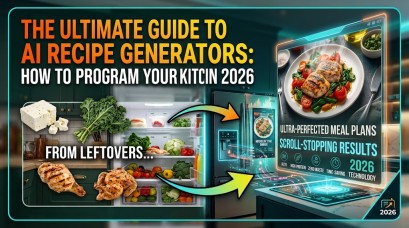
Imagine walking into your kitchen, opening a fridge containing half a block of feta, a slightly wilted bunch of kale, and some leftover grilled chicken, and having a Michelin-star-level recipe tailored exactly to your nutritional goals generated in less than three seconds.
Welcome to cooking in 2026.
Read Also: How to Get High Paying AI Remote Jobs on Mercor: A Step-by-Step Guide (2026)
AI recipe generators have evolved from novelty text bots into deeply integrated, multimodal culinary ecosystems. Whether you are looking to slash your grocery bill, hit a precise macronutrient target, or just answer the dreaded “What’s for dinner?” question, programming your kitchen is the ultimate life hack.
This comprehensive guide covers everything you need to know about AI meal planners, how they work, and how to choose the best one for your countertop.
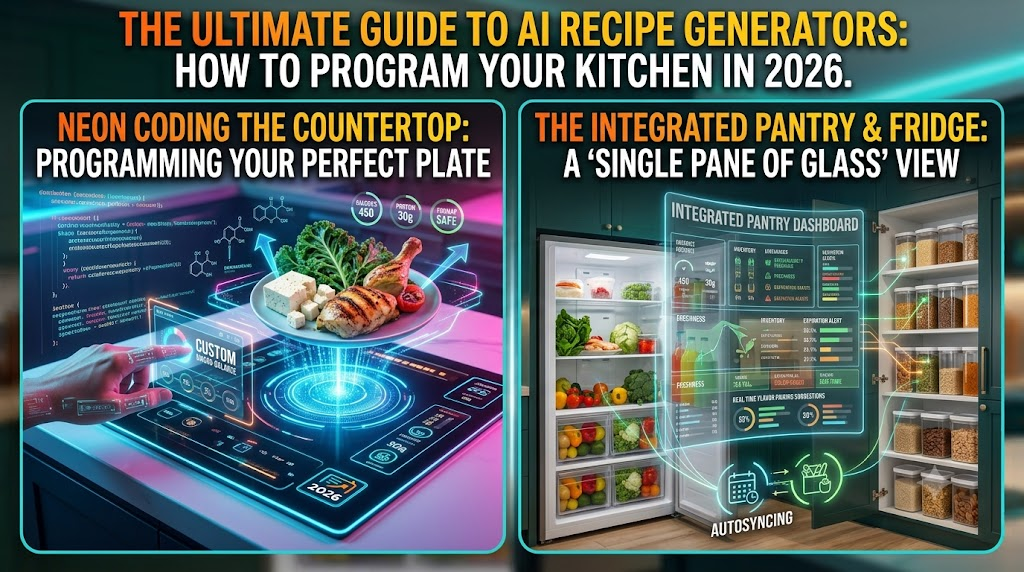
What is an AI Recipe Generator?
An AI recipe generator is a software application powered by Large Language Models (LLMs) and computer vision that creates customized cooking instructions based on user inputs.
Unlike traditional recipe sites that force you to scroll through pages of lifestyle blogs to find a static ingredient list, AI platforms build recipes from scratch or dynamically adapt existing databases to match your exact parameters.
The 2026 Evolution: Multimodal and Connected
In 2026, AI generators aren’t just reading text prompts. They utilize multimodal AI, meaning they can “see” and “hear.” You can snap a photo of your pantry, and the AI will automatically identify the ingredients, calculate their shelf-life, and generate a recipe to consume the items closest to expiration.
How AI Recipe Generators Work
At their core, these tools utilize advanced machine learning algorithms trained on millions of culinary datasets.
[User Input: Photo/Text] ➔ [AI Analysis: Flavor Pairing + Nutrition] ➔ [Smart Output: Custom Recipe]
- Input Analysis: The AI parses your request (e.g., “Keto-friendly dinner using salmon and broccoli”).
- Flavor Profile Matching: Using neural networks trained on culinary chemistry, the AI determines which spices and techniques complement your ingredients.
- Constraint Filtering: The system filters out allergens, cross-references your calorie limits, and adjusts cooking times based on your specified appliances (e.g., Air Fryer vs. Sous Vide).
Read also: Mercor vs OneForma vs Outlier: Which Is the Best Platform to Make Money Online in 2026?
Top Benefits of Programming Your Kitchen
Switching from traditional meal planning to an AI-driven kitchen offers massive advantages:
- Zero Food Waste: Turn random leftovers into cohesive meals. The average household saves up to 25% on groceries by maximizing what they already own.
- Hyper-Hyper-Personalization: Manage complex dietary restrictions effortlessly. If you need a meal that is low-FODMAP, gluten-free, dairy-free, and high-protein, AI handles the math instantly.
- Automated Grocery Syncing: Modern tools don’t just give you a text list; they automatically populate your digital cart on services like Instacart or Amazon Fresh.
Best AI Recipe Generators and Meal Planners (2026 Review)
The kitchen AI market has matured, splitting into specialized tools depending on your culinary goals.
| AI Tool | Best For | Standout Feature | Price |
| ChefGPT | Creative Everyday Cooking | “Fridge Mode” (turns scraps into gourmet meals) | Free / Premium tier |
| MealPractice | Structured Weekly Planning | Seamless macro tracking and automated prep schedules | Paid Subscription |
| DishGen | Instant Idea Generation | Text-to-recipe generation with a massive public community database | Free / Freemium |
| Samsung Food / Whisk | Smart Kitchen Integration | Connects directly to smart ovens and refrigerators | Free |
How to Write the Perfect AI Recipe Prompt
If you want the absolute best results from a generative AI kitchen assistant, your prompt structure matters. Garbage in, garbage out. Use this master prompt template for flawless execution:
The Master Kitchen Prompt:
“Act as a professional chef. Create a [Meal Type] recipe that serves [Number] people. I want to use [Core Ingredients]. Exclude [Allergens/Disliked Foods]. The cooking method must use a [Appliance, e.g., Instant Pot]. Optimize the meal for [Goal, e.g., high protein, under 30 minutes].”
Example of a Good vs. Bad Prompt
- Bad: “Give me a chicken recipe.” (Result: Generic, bloated, might require ingredients you don’t have.)
- Good: “Give me a 20-minute, high-protein Mediterranean dinner using chicken breast, cherry tomatoes, and spinach. I only have an air fryer. Keep it under 500 calories.”
Frequently Asked Questions (FAQs)
Are AI-generated recipes safe to eat?
Yes, AI-generated recipes are generally completely safe. However, because LLMs can occasionally “hallucinate,” you should always use common sense. Ensure meat is cooked to safe internal temperatures and double-check that the AI hasn’t suggested an impossible cooking time (like baking a whole chicken in 5 minutes).
Can AI adapt recipes for specific diets like Keto, Vegan, or FODMAP?
Absolutely. This is where AI excels over human cookbooks. An AI can instantly substitute dairy ingredients with plant-based alternatives while adjusting the cooking chemistry to ensure the texture remains perfect.
Do I need a smart fridge to use an AI meal planner?
Not at all. While integration with smart appliances makes things seamless, 95% of users interact with AI recipe generators via standard mobile apps or web browsers on their smartphones.
The Future of AI Cooking
As we look deeper into 2026 and beyond, the line between software and hardware will completely blur. We are already seeing the rise of AI assistants that monitor your biometric data via smartwatches to adjust your dinner’s micronutrients based on your workout that afternoon.
Programming your kitchen isn’t about removing the joy of cooking—it’s about removing the cognitive friction of planning, budgeting, and wasting food, leaving you free to enjoy the creative art of making great meals.





Leave a Reply