What If You Could Crack Any Restaurant Recipe With One Prompt?
You’ve tasted that dish a hundred times. You’ve Googled it. You’ve watched YouTube videos. You’ve even tried to eyeball it in your own kitchen — and it still doesn’t taste right.
What most home cooks don’t realise is that the gap between restaurant food and home food is not talent. It’s information architecture. Professional chefs use specific ratios, cooking sequences, and ingredient combinations that never make it onto menus or recipe cards.
But here’s what changed in 2024 and beyond: Claude — Anthropic’s AI model — can now function as your culinary reverse-engineering partner. Not to guess randomly, but to apply structured food science logic, flavour profiling, and cooking chemistry to break down what’s actually inside a dish.
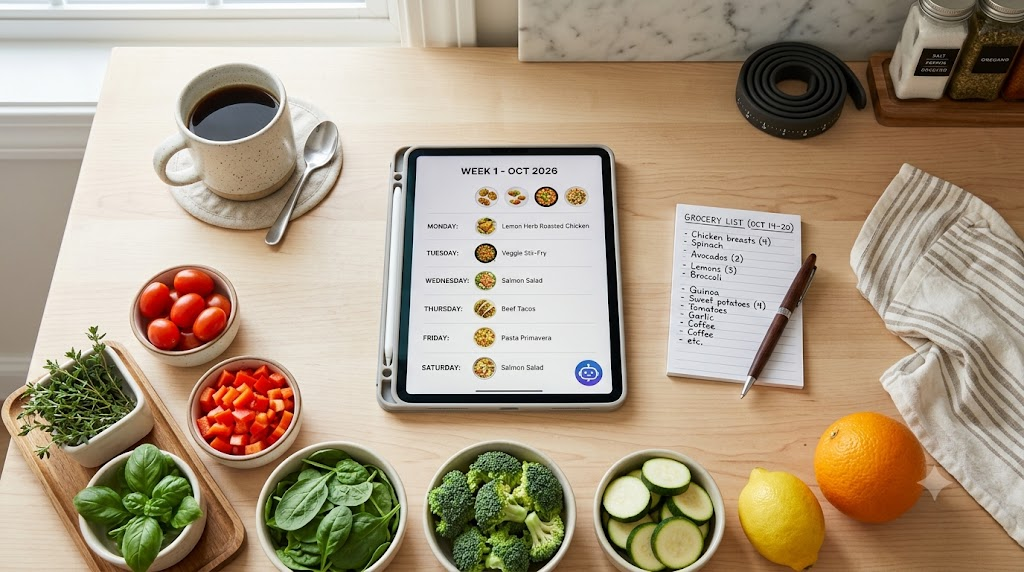
This guide gives you 10 advanced, tested Claude AI prompts that will help you recreate any restaurant copycat recipe at home — from fast food to fine dining.
Why Claude Is Unusually Good at Reverse-Engineering Recipes
Before the prompts, let’s address what makes Claude different from a basic Google search when it comes to food.
Claude has been trained on an enormous corpus of culinary knowledge — cookbooks, food science papers, restaurant industry publications, chef interviews, and flavour pairing databases. When you ask Claude about a dish, it doesn’t just retrieve a cached recipe. It reasons about:
- Flavour layering — how base, acid, fat, salt, and heat interact
- The Maillard reaction and caramelisation stages — why that crust tastes different from home
- Regional ingredient substitutions — what a restaurant in Lagos or London uses vs. what you have access to
- Proprietary spice blend logic — how to approximate a branded seasoning from first principles
- Texture mechanics — why a restaurant burger patty has that specific snap and juiciness
The prompts below are engineered to extract this reasoning in a structured, actionable way.
How to Use These Prompts
Each prompt below is designed to be pasted directly into Claude at claude.ai. You’ll replace the bracketed placeholders with the specific dish or restaurant you’re targeting.
For best results:
- Use Claude Sonnet 4.6 or higher (available on free and Pro plans)
- Be as specific as possible — name the exact dish, restaurant chain, and your region
- Follow up with refinement prompts based on Claude’s first response
The 10 Advanced Claude Prompts
Prompt 1: The Flavour Decomposition Prompt
Use this when: You’ve eaten the dish multiple times and want to break down what you’re actually tasting.
The Prompt:
“I want to reverse-engineer [DISH NAME] from [RESTAURANT NAME]. Act as a trained flavour scientist and culinary analyst. Break down this dish across these six dimensions: (1) dominant flavour profile (sweet, salty, umami, acidic, bitter, fatty), (2) likely protein preparation method and marinade, (3) aromatic compounds — herbs, spices, and aromatics I should detect, (4) texture components and how they’re achieved, (5) likely fat source and its role, (6) finishing elements like garnish, sauce drizzle, or seasoning added post-cooking. For each dimension, give me your best professional estimate and explain the reasoning behind it.”
Why it works: By forcing Claude to reason across six flavour dimensions rather than just listing ingredients, you get a much richer breakdown — and you start to understand why the dish tastes the way it does, not just what’s in it.
Prompt 2: The Ingredient Forensics Prompt
Use this when: You want a working ingredient list with estimated quantities and sourcing notes.
The Prompt:
“Based on publicly available information and food science reasoning, reverse-engineer the likely ingredient list for [DISH NAME] from [RESTAURANT NAME]. For each ingredient, provide: the ingredient name, estimated quantity for a single serving, its functional role in the dish (e.g., acid balance, Maillard agent, emulsifier), and a local substitute I can use in [YOUR CITY/COUNTRY] if the exact ingredient isn’t available. Organise the list into: protein, marinade/dry rub, cooking fat, sauce/glaze, and garnish.”
Why it works: The functional role column is the key insight here. Once you know why an ingredient is in a dish, you can swap it intelligently rather than blindly.
Prompt 3: The Secret Sauce Decoder Prompt
Use this when: The sauce or condiment is the heart of the dish (think: Shake Shack sauce, Jollibee’s palabok, Chick-fil-A sauce).
The Prompt:
“I’m trying to recreate the signature sauce from [DISH NAME] at [RESTAURANT NAME]. Using food science principles and flavour chemistry, give me: (1) the most likely base ingredients and their approximate ratios, (2) the emulsification or binding method used, (3) the heat or spice level mechanism — what compounds create that specific heat signature, (4) the acidity source and its approximate pH range, (5) what makes this sauce shelf-stable or fresh, and (6) a step-by-step method to make it at home. End with a troubleshooting note — what will make it taste wrong and how to fix it.”
Why it works: Sauces are the most proprietary part of any restaurant recipe. This prompt forces Claude to reason from chemistry first, not just guess common ingredients.
Prompt 4: The Cooking Method Archaeology Prompt
Use this when: The texture or cooking technique is what you can’t replicate — not just the ingredients.
The Prompt:
“The ingredient list isn’t my problem — the technique is. I can’t replicate [DISH NAME] from [RESTAURANT NAME] because the texture/cooking result is different at home. Act as a professional chef consultant and diagnose what commercial cooking methods might produce this result that home cooks typically can’t replicate. Cover: (1) equipment differences (commercial fryer vs. home fryer, deck oven vs. home oven, plancha vs. home pan), (2) temperature precision and timing windows, (3) any pre-treatment steps (brining, par-cooking, resting, marinating duration), (4) the exact sequence of cooking stages, and (5) how to achieve the closest possible result with standard home kitchen equipment.”
Why it works: Most copycat recipe failures are technique failures, not ingredient failures. This prompt targets the real gap.
Read Also: The Ultimate Guide to AI Recipe Generators: How to Program Your Kitchen in 2026
Prompt 5: The Spice Blend Reverse-Engineering Prompt
Use this when: You’re trying to crack a proprietary spice blend — like KFC’s 11 herbs and spices, or the seasoning on a specific fast food fry.
The Prompt:
“I want to reverse-engineer the spice blend used in [DISH NAME] from [RESTAURANT NAME]. Using food science, known flavour profiles of this restaurant chain, and published research or leaked information where available, give me: (1) a ranked list of most-likely spices from dominant to background note, (2) estimated weight ratios expressed as percentages, (3) the function of each spice — flavour, colour, aroma, or preservation, (4) whether any spice is likely pre-toasted or processed before blending, and (5) a suggested home-blend recipe I can make in a jar and store. Note any spices that are commonly used in commercial versions but are hard to source for home cooks, and suggest substitutes.”
Why it works: Spice blends have a logic to them — heat compounds, aromatic volatiles, and base flavour carriers follow patterns. Claude can reason about those patterns precisely.
Prompt 6: The Price-to-Plate Reverse Engineering Prompt
Use this when: You want to understand the cost structure of a restaurant dish to recreate it economically at home.
The Prompt:
“I want to recreate [DISH NAME] from [RESTAURANT NAME] at home for a fraction of the cost. First, estimate the likely food cost percentage for this dish in a commercial setting (typically 28–35% of menu price). Then reverse-engineer a home version that: (1) uses the same flavour architecture but with budget-friendly substitutions, (2) scales to feed 4 people, (3) replaces any expensive proprietary ingredient with a homemade or accessible alternative, and (4) cuts no corners on the elements that matter most to the dish’s identity. Give me both a ‘budget version’ and a ‘premium home version’ with cost estimates for each.”
Why it works: This prompt is especially useful for Nigerians and African home cooks who may not have access to every imported ingredient — and it frames the problem economically, which often leads to more creative substitutions.
Prompt 7: The Regional Adaptation Prompt
Use this when: The original dish uses ingredients not available in your country or region.
The Prompt:
“I want to recreate [DISH NAME] from [RESTAURANT NAME], but I’m cooking in [YOUR CITY/COUNTRY] and don’t have access to [SPECIFIC UNAVAILABLE INGREDIENTS]. Please: (1) identify which ingredients are essential to the dish’s identity and cannot be substituted without fundamentally changing the dish, (2) identify which ingredients can be replaced with local alternatives, (3) suggest the best local substitutes available in [YOUR REGION] for each replaceable ingredient, (4) note any flavour adjustments I’ll need to make to compensate for substitutions, and (5) give me a fully adapted recipe using locally available ingredients. Prioritise authenticity of flavour over exact ingredient matching.”
Why it works: This is arguably the most practical prompt for African home cooks — it doesn’t pretend everyone has access to the same global pantry.
Prompt 8: The Nutritional Deconstruction Prompt
Use this when: You want a healthier version of the dish but refuse to sacrifice flavour.
The Prompt:
“I love [DISH NAME] from [RESTAURANT NAME] but I want to make a healthier home version without destroying what makes it delicious. First, estimate the nutritional profile of the original dish (calories, macros, sodium, fat type). Then identify: (1) the top three nutritional concerns in this dish, (2) which ingredients contribute most to those concerns, (3) specific substitutions that reduce those concerns without killing the flavour (e.g., Greek yogurt for heavy cream, air frying instead of deep frying), (4) the flavour trade-offs of each substitution, and (5) a modified recipe that is at least 30% lower in the primary concern while maintaining a 9/10 flavour rating. Be honest about where the compromise is unavoidable.”
Why it works: Claude doesn’t just swap ingredients blindly here — it reasons about what trade-offs are worth making, which gives you a much more nuanced healthier version.
Prompt 9: The Chain Restaurant Consistency Prompt
Use this when: You want to understand how a chain restaurant maintains flavour consistency across thousands of locations.
The Prompt:
“One of the reasons [RESTAURANT CHAIN NAME] tastes consistent across all their locations is that their recipes are engineered for industrial reproducibility. Explain the food science principles that make [DISH NAME] consistent at scale, including: (1) pre-prepared or frozen components that are likely used, (2) standardised sauces, marinades, or spice mixes that come from a central supplier, (3) equipment standardisation that ensures the same cook result, (4) holding times and temperature protocols that affect the final flavour, and (5) what this means for the home cook — specifically, which elements are impossible to replicate without their equipment or ingredients, and how to work around that honestly.”
Why it works: This meta-level understanding helps you stop chasing the impossible and focus on what’s actually achievable at home.
Read Also: Top 10 Food Recipe Generation AI Tools for Busy Professionals (2026 Edition)
Prompt 10: The Full Copycat Recipe Build Prompt
Use this when: You’ve gathered enough intelligence and want Claude to output a complete, structured copycat recipe ready to cook.
The Prompt:
“Using everything we’ve discussed (or your best food science reasoning), write me a complete home copycat recipe for [DISH NAME] from [RESTAURANT NAME]. Format it as follows: (1) Recipe name and one-sentence origin description, (2) Servings and prep/cook/total time, (3) Equipment list with any critical specifications, (4) Full ingredient list with measurements in both metric and imperial, (5) Step-by-step method with exact temperatures and timing, (6) Critical technique notes — the three things most likely to go wrong and how to prevent them, (7) A storage and reheating guide to maintain quality, (8) A ‘make it your own’ section with two or three personalisation ideas. Write for a competent home cook who has failed at this recipe at least once before.”
Why it works: The “competent home cook who has failed before” framing is intentional — it tells Claude to skip the obvious beginner steps and focus on the hard parts.
Read Also: How to Sell Your Ebook Daily Without Ads, Followers, or a Big Audience

How to Chain These Prompts Together
These prompts are even more powerful when used in sequence. Here’s a recommended workflow for tackling any dish:
Step 1 — Flavour mapping: Start with Prompt 1 (Flavour Decomposition) to build your mental model of the dish.
Step 2 — Ingredient intelligence: Use Prompt 2 (Ingredient Forensics) and Prompt 5 (Spice Blend) to build your ingredient list.
Step 3 — Technique diagnosis: Apply Prompt 4 (Cooking Method Archaeology) to understand the technique gaps.
Step 4 — Adaptation: If you’re cooking in Africa or anywhere outside the dish’s origin country, run Prompt 7 (Regional Adaptation).
Step 5 — Full build: End with Prompt 10 (Full Copycat Recipe Build), which now benefits from all the context you’ve accumulated.
When used this way, you’re not just getting a recipe — you’re building a culinary intelligence file for a dish.
Common Questions About Using AI for Copycat Recipes
Can Claude actually give me the exact recipe for a proprietary dish?
Not the exact proprietary recipe — that’s confidential information that no AI has access to. What Claude can do is reason from food science, flavour chemistry, and public culinary knowledge to produce a version that is functionally and flavourwise very close. The quality of the output depends heavily on how well you prompt it — which is exactly what this guide is for.
Are these prompts free to use?
Yes. Claude has a free tier at claude.ai that is sufficient for all these prompts. A Claude Pro subscription (currently $20/month) gives you access to longer context windows and faster response times, which helps when chaining multiple prompts together.
What if Claude gives me a recipe that doesn’t taste right?
Iterate. Ask Claude: “I tried this and the result was [describe what went wrong]. What’s the most likely cause and how do I fix it?” Claude is genuinely useful at troubleshooting cooking failures when you describe the sensory problem precisely (too sweet, crust not forming, too dry, missing depth, etc.).
Can I use these prompts for Nigerian restaurant dishes?
Absolutely — and in fact, Nigerian dishes like Suya, Jollof rice, Pounded yam with egusi, or the specific spice profile of a Lagos restaurant are excellent candidates for this approach. Claude has meaningful knowledge of West African cuisine and can reason about those flavour profiles, though the regional adaptation prompt (Prompt 7) will be especially valuable.
What’s the best Claude model to use for these prompts?
Claude Sonnet 4.6 (the default at claude.ai) is excellent for all of these. It balances speed, reasoning depth, and culinary knowledge effectively. You don’t need Claude Opus unless you’re doing deep multi-turn research sessions with very complex dishes.
Final Thoughts: You’re Not Copying a Recipe. You’re Learning Food Science.
The most valuable thing about using Claude to reverse-engineer restaurant dishes isn’t the recipe you end up with. It’s the understanding you develop along the way.
When you ask Claude to explain why a spice blend works, or what causes a specific texture, or how a sauce holds together — you’re building culinary intelligence that transfers to every dish you’ll ever cook. You stop being a recipe follower and start being a flavour thinker.
The 10 prompts in this guide are a starting point, not a ceiling. Modify them, combine them, and push back on Claude’s answers when they don’t match your experience. The best results come from treating Claude as a thinking partner, not a search engine.
Now go recreate that dish.
Published by AI Discoveries — Africa’s leading platform for practical AI education. For more Claude prompts, AI tools guides, and productivity systems built for African professionals, visit aidiscoveries.io.
“HOW TO USE CLAUDE COWORK AS A BEGINNER — EVERYTHING YOU NEED TO KNOW”
“Best Claude Prompts for Nigerian Entrepreneurs” | “Claude vs ChatGPT: Which Is Better for Content Creation?” How to Get High Paying AI Remote Jobs on Mercor: A Step-by-Step Guide (2026)





Leave a Reply